The James Webb
Space Telescope
Reshaping Our Cosmic Understanding Through Revolutionary Discoveries
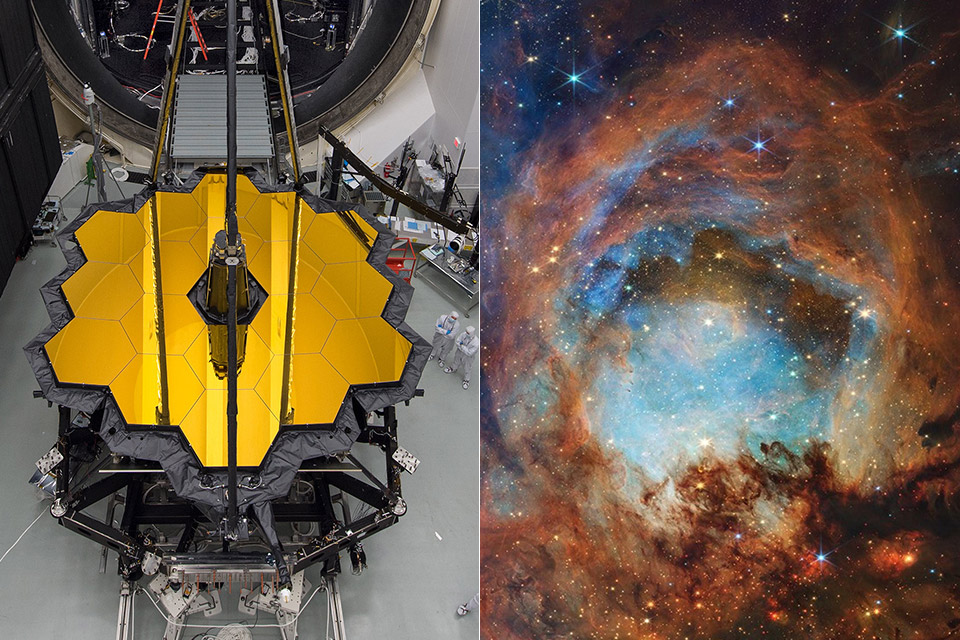
Record-Breaking Galaxies
JWST discovered galaxies existing just 280 million years after the Big Bang, rewriting cosmic timelines.
Exoplanet Chemistry
Detection of complex molecules including potential biosignatures in distant planetary atmospheres.
Cosmic Dawn
Unprecedented insights into the Epoch of Reionization, revealing how early galaxies illuminated the universe.
The James Webb Space Telescope (JWST), launched on December 25, 2021, has rapidly become an indispensable tool for astronomers, fundamentally altering our understanding of the cosmos across a wide range of astrophysical phenomena [1] [523]. Its unprecedented sensitivity, particularly in the infrared spectrum, allows it to peer further back in time and with greater clarity than any previous telescope.
Revolutionizing Observations of Distant Galaxies
The James Webb Space Telescope has ushered in a new era in the study of distant galaxies, providing an unparalleled view into the early universe and the processes that shaped galactic evolution. Its ability to detect faint infrared light from objects billions of light-years away has allowed astronomers to observe galaxies as they were when the universe was in its infancy.
Unveiling the Early Cosmos: Discovery of High-Redshift Galaxies
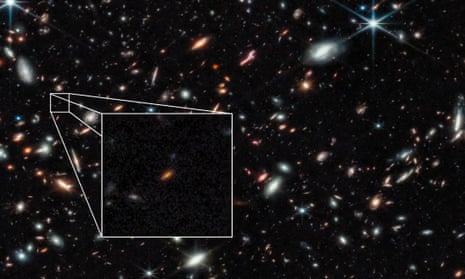
Artist's impression of early galaxies observed by JWST in the cosmic dawn
One of JWST's primary scientific goals is to observe the "cosmic dawn," the period when the first stars and galaxies began to illuminate the universe. The telescope has exceeded expectations in this regard, identifying a significant number of galaxies at extremely high redshifts, meaning they are seen as they were when the universe was very young.
JADES-GS-z14-0
Observed at 290 million years after the Big Bang (redshift ~14) [393] [396]
Diameter: 1,600 light-years | Mass: 400 million Suns | Remarkably bright and blue
JADES-GS-z13-1
Observed at 330 million years post-Big Bang (redshift 13.0) [422] [432]
Showed strong Lyman-alpha emission, suggesting early clearing of hydrogen fog
MoM-z14
Confirmed at redshift 14.44 - just 280 million years after the Big Bang [423] [425]
Most distant spectroscopically confirmed galaxy to date
Deep Field Surveys: Mapping the Farthest Reaches
JWST's deep field surveys are providing an unprecedented census of the distant universe, revealing a plethora of galaxies that were previously invisible. The JADES Deep Field shows tens of thousands of galaxies in a tiny patch of sky, including hundreds that existed more than 13.2 billion years ago [412].
COSMOS Survey Achievement
The Cosmic Evolution Survey (COSMOS) collaboration, utilizing JWST, unveiled the largest-ever map of the universe:
- Covering 0.54-degree-squared arc of the sky
- Revealing almost 800,000 galaxies
- Some dating back approximately 13 billion years [401]
The UNCOVER program, which mapped the galaxy cluster Abell 2744 (Pandora's Cluster), has been instrumental in identifying tiny, distant galaxies from the universe's first billion years [390] [424].
Unprecedented Detail: Resolving Structures in Early Galaxies
Beyond simply detecting distant galaxies, JWST's high resolution and sensitivity are allowing astronomers to study their internal structures and compositions in unprecedented detail. This capability is crucial for understanding how galaxies form and evolve.
Morphological Diversity
JWST observations reveal a diversity in galaxy morphologies at high redshifts:
- • Compact, star formation-dominated galaxies
- • Extended structures suggesting mergers
- • Unexpected morphological complexity [227]
Transforming Exoplanet Science: Probing Atmospheres and Diversity
JWST has initiated a revolution in exoplanetary science, providing capabilities that far surpass previous observatories in characterizing the atmospheres of planets beyond our solar system and exploring the diversity of these distant worlds [36]. Its advanced infrared instruments allow for detailed spectroscopic analysis, unveiling the chemical compositions, physical processes, and even potential habitability of exoplanets.
Chemical Fingerprints: Detecting Molecules in Exoplanet Atmospheres
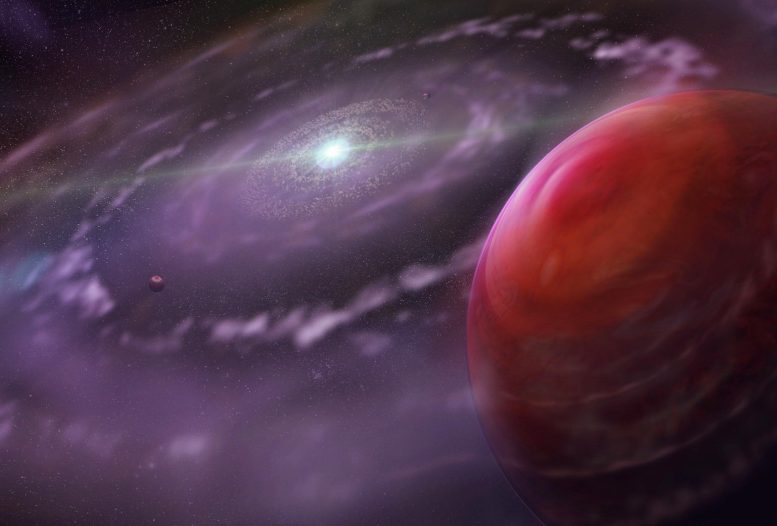
Spectroscopic analysis revealing molecular composition of exoplanet atmospheres
A primary strength of JWST in exoplanet research is its ability to perform transmission and emission spectroscopy, dissecting the light from a host star as it passes through an exoplanet's atmosphere or the light emitted by the planet itself. This allows for the identification of specific molecules based on their unique spectral signatures [204].
Key Molecular Detections
Characterizing Diverse Worlds: From Gas Giants to Rocky Planets
JWST is studying a wide variety of exoplanets, from gas giants and sub-Neptunes to smaller, potentially rocky worlds, providing insights into the diversity of planetary systems [36].
Direct Imaging and New Discoveries
In addition to studying transiting exoplanets, JWST is also capable of directly imaging exoplanets, particularly young, self-luminous gas giants far from their host stars.
Notable Imaging Achievements
Jupiter-Mass Binary Objects (JuMBOs)
In the Orion Nebula, JWST detected numerous planet-sized objects (down to 0.6 Jupiter masses) orbiting each other, unassociated with any star [4].
These free-floating binary objects defy current theories of star and planet formation, potentially requiring new theoretical frameworks.
Illuminating the Early Universe: From First Light to Cosmic Dawn
JWST is uniquely equipped to study the early universe, a period often referred to as "cosmic dawn," when the first stars and galaxies formed and began to illuminate the cosmos. Its observations are providing crucial data on the Epoch of Reionization, the formation of the first structures, and challenging our understanding of the fundamental physics governing the universe's evolution.
Peering into the Epoch of Reionization

Artist's impression of early galaxies ionizing the cosmic hydrogen fog during the Epoch of Reionization
The Epoch of Reionization (EoR) marks the period when the neutral hydrogen gas that filled the early universe was ionized by the light from the first stars and galaxies, making the universe transparent to ultraviolet light.
Key Findings
Challenging Cosmological Models: The Abundance of Early Massive Galaxies
One of the most significant impacts of JWST's early universe observations has been the challenge posed to standard cosmological models, particularly the Lambda-Cold Dark Matter (ΛCDM) model. The telescope has discovered an unexpectedly large number of massive, bright galaxies existing at very high redshifts, much earlier than predicted [4] [208].
The Challenge to ΛCDM
JWST has found "impossible galaxies" or "cosmic miracles" that are difficult to reconcile with the bottom-up hierarchical formation scenario:
Proposed Solutions
Tracing the First Stars and Black Holes
JWST is also providing crucial data on the formation of the first stars (Population III stars) and the growth of supermassive black holes (SMBHs) in the early universe.
Population III Star Clues
Unusual chemical abundances in primordial galaxies may indicate nucleosynthetic yields of first stellar generations:
Overall Impact and Future Prospects of JWST
The James Webb Space Telescope has already had a transformative impact on astronomy and astrophysics, fundamentally altering our understanding of the universe across a wide range of scales and epochs. Its ability to observe in the infrared with unprecedented sensitivity and resolution has opened new frontiers of discovery, leading to a wealth of new data and scientific publications.
A New Era of Astrophysics
Since the commencement of its science operations in July 2022, JWST has demonstrated its revolutionary capabilities, exceeding expectations in its ability to probe the cosmos [1].
JWST by the Numbers
Future Observations
With an expected operational lifetime significantly exceeding its initial design, thanks to precise launch and efficient fuel use [344], JWST is poised to continue its revolutionary work.
GLIMPSE Program
Identify even fainter galaxies from Epoch of Reionization using gravitational lensing [354].
Exoplanet Studies
Refine atmospheric compositions, climate dynamics, and habitability potential.
Transient Events
Study supernovae and gamma-ray bursts for extreme physics insights.
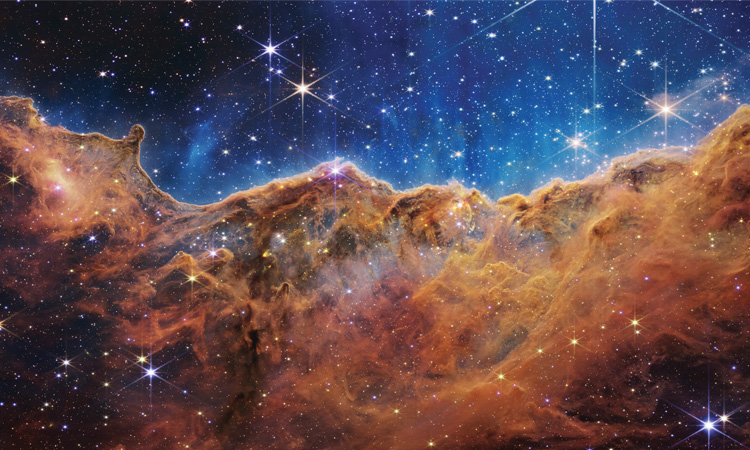
JWST's ongoing mission promises to continue revolutionizing our understanding of the cosmos
The Cosmic Revolution Continues
The James Webb Space Telescope has fundamentally transformed our understanding of the universe in just three years of operation. From discovering galaxies that existed a mere 280 million years after the Big Bang to detecting complex chemistry in exoplanet atmospheres, JWST has consistently challenged our assumptions and opened new frontiers of discovery.
The telescope's ability to observe in the infrared with unprecedented sensitivity has revealed a universe that is more complex, dynamic, and mysterious than we ever imagined. As JWST continues its mission, we can expect more revolutionary discoveries that will reshape our cosmic perspective and inspire future generations of scientists.