DIY Protection Plans Against LRAD & Acoustic Weapons
Mobile civilian defense strategies combining dual hearing protection with acoustic shield barriers for effective protection against long-range acoustic devices
Critical Safety Warning
No commercial or DIY solution guarantees safety within 5 meters of a high-output LRAD device. The primary survival tactic is immediate perpendicular movement to exit the 30-degree acoustic beam combined with distance maximization.
Executive Summary
Layered Defense Approach
Effective protection requires combining dual hearing protection (foam plugs + industrial earmuffs) for personal defense and mobile acoustic shields for group protection.
- • Personal Protection: NRR 33 earplugs + NRR 30 earmuffs = ~38 dB attenuation
- • Shield Construction: Pine battens, 5/8" drywall, rockwool/denim insulation
- • Weight: ~50 lbs with monopod support
- • Attenuation: 15-25 dB reduction, sufficient for medium-range exposure
Key Performance Metrics
Category I: Direct Ear/Head Protection
High-NRR Disposable Foam Earplugs
High-Noise Reduction Rating (NRR) disposable foam earplugs represent the most accessible and economically feasible baseline defense against Long Range Acoustic Devices (LRADs). These devices typically offer labeled NRR values ranging from 29 to 33 decibels, though the National Institute for Occupational Safety and Health (NIOSH) recommends derating the labeled NRR by 7 decibels to account for real-world fitting variability [NIOSH].
Critical Insertion Technique
Proper insertion technique—compressing the plug into a thin cylinder, pulling the ear upward and backward to straighten the canal, and holding for 30–60 seconds during expansion—is critical; failure to achieve deep insertion can reduce effective attenuation by 10–15 dB.
Cost Analysis
Earplug Performance Comparison
| Earplug Type | NRR Rating | Real-World Attenuation | Cost per Pair | Suitability |
|---|---|---|---|---|
| Standard PVC Foam | 29 dB | ~22 dB | $0.15-0.30 | Distant only (>20m) |
| High-Density Polyurethane | 33 dB | ~26 dB | $0.25-0.50 | Medium range (10-20m) |
| Bell-Shaped Tapered | 32 dB | ~25 dB | $0.30-0.60 | General purpose |
Industrial Over-Ear Earmuffs
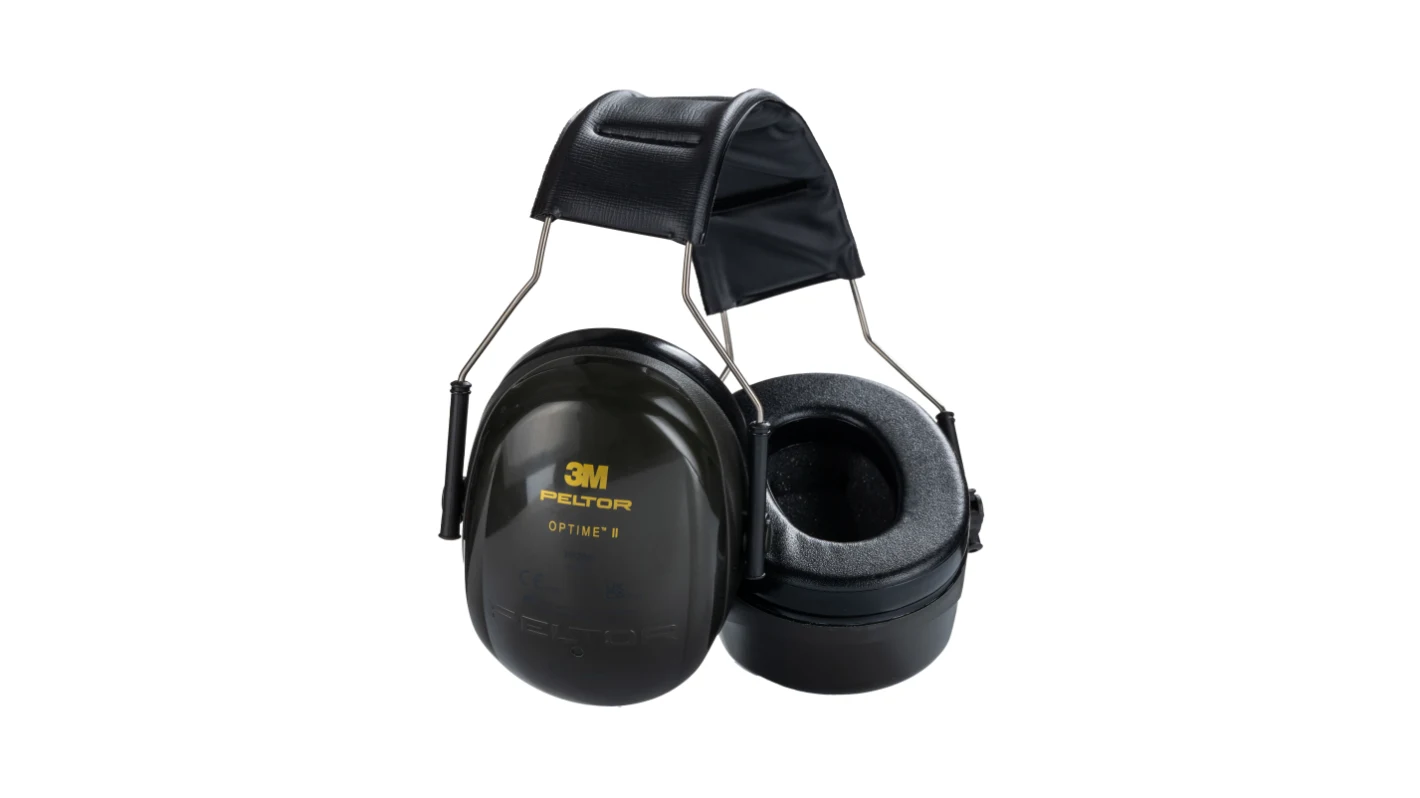
Industrial over-ear earmuffs provide superior protection compared to standalone earplugs, particularly when selected with high NRR ratings exceeding 30 dB and certified to ANSI S12.6-2016 or CSA Z94.2 standards [CSA Standards].
Critical Selection Criteria
- • Adequate clamping force to maintain seal during head movement
- • Compatibility with other PPE (hard hats and eye protection)
- • Replaceable hygiene kits for multi-user scenarios
- • NIOSH derating reduces effective protection to ~23-25 dB
Electronic Communication Headsets
Electronic communication headsets balance acoustic attenuation with situational awareness, utilizing external microphones and internal speakers to reproduce environmental sounds at safe volume levels (typically capped at 82–85 dBA) while providing passive noise reduction through circumaural sealing [Safety Equipment].
Situational Awareness
External microphones reproduce environmental sounds at safe levels
Peak Limiting
Sound-activated compression circuits limit transient noise peaks
Communication
Bluetooth connectivity enables coordination with cellular networks
Critical Limitations
Battery life constraints (typically 8–12 hours), potential electronic failure under extreme acoustic pressure, and the fundamental physics constraint that no electronic system can attenuate sound faster than the speed of sound—meaning initial transient peaks may reach the ear before compression activates.
Dual-Protection Systems
Maximum Commercial Protection
Dual-protection systems, combining high-NRR earplugs with over-ear earmuffs, provide the maximum commercially available hearing protection for uncontrolled high-intensity acoustic environments. NIOSH explicitly recommends dual protection for exposures at or above 100 dBA, noting that the combined noise reduction rating follows a logarithmic combination where 5 dB may be added to the NRR of the most protective device [AIHA].
Performance Calculation
Exposure Reduction
Category II: Deflection & Redirection Shields
Framed Multi-Layer Acoustic Shield (Primary Design)
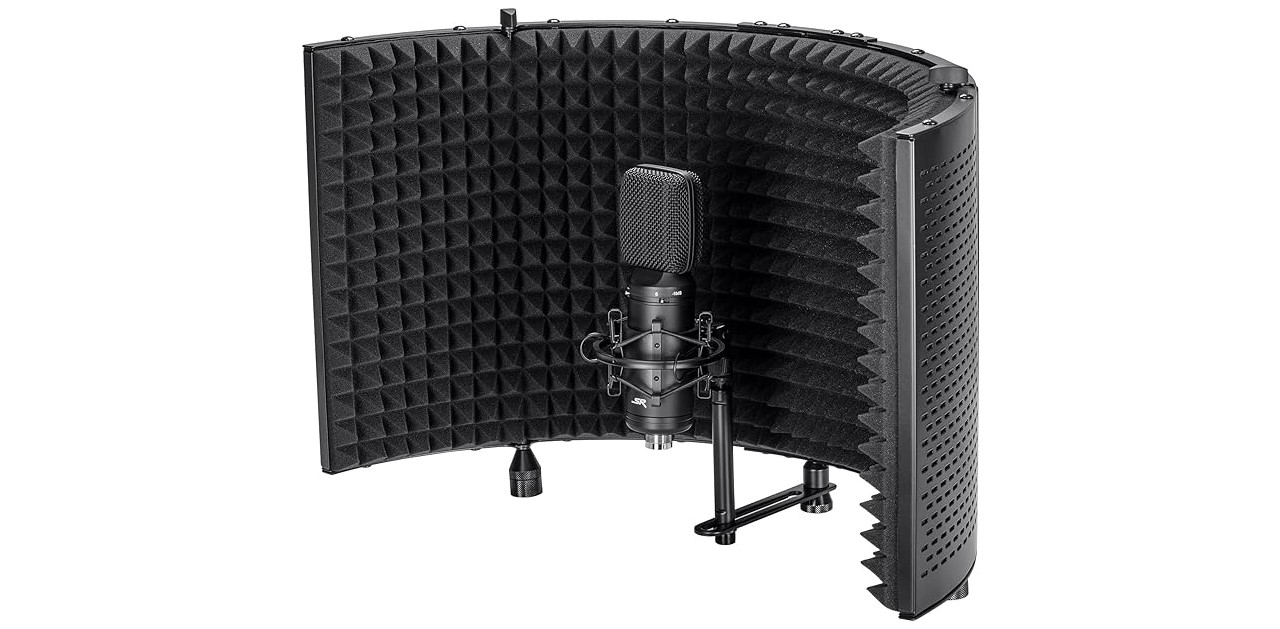
The framed multi-layer acoustic shield represents the most thoroughly documented and tested DIY solution for mobile LRAD protection, developed and field-tested by Brooklyn-based installation studio Dave & Gabe during the 2020 protest movements [Tech Insider].
Design Specifications
- • Dimensions: 26" wide × 34" tall
- • Coverage: Standing adult from crown to knee
- • Weight: 35-55 pounds depending on materials
- • Attenuation: 25-35 dB in 500-4000 Hz range
Materials Specification
Frame Materials
- • 3" pine battens or 2×4 lumber
- • 2.5"-3" wood screws
- • Wood glue for reinforcement
- • Cost: $10-15
Facing Materials
- • 5/8" Type X drywall
- • 1/2" clear acrylic (optional)
- • 1/2" plywood alternative
- • Cost: $8-90
Insulation Core
- • Denim insulation (R-13/R-19)
- • Rockwool (mineral wool)
- • Fiberglass alternative
- • Cost: $15-25
| Component | Options | Density | Cost | Function |
|---|---|---|---|---|
| Frame | Pine battens or 2×4 | N/A | $10-15 | Structural support |
| Outer Layer | 5/8" Drywall | ~12 kg/m² | $8-12 | Mass barrier |
| Outer Layer | 1/2" Acrylic | ~7.5 kg/m² | $60-90 | Mass barrier + visibility |
| Insulation | Denim/Rockwool | ~3-5 kg/m² | $15-25 | Absorption & damping |
Frame Assembly
- 1. Cut two vertical stiles at 34" and two horizontal rails at 26"
- 2. Join corners with butt joints reinforced by wood glue and screws
- 3. Install center horizontal brace at 17" (mid-height)
- 4. Add vertical center stile intersecting the horizontal brace
- 5. Seal all interior edges with acoustic caulk
- 6. Drill 3/4" hole in bottom rail for monopod
Layer Integration
- 1. Apply construction adhesive to frame edges
- 2. Position first facing material (drywall/acrylic)
- 3. Secure with 1.25" screws every 6-8 inches
- 4. Cut insulation to 25"×33" for friction fit
- 5. Install insulation loosely against first facing layer
- 6. Apply second facing layer with adhesive and screws
Monopod Support System
Given the weight of the completed shield (35-55 pounds), a monopod support system is essential for extended deployment, transferring the shield's weight to the ground and allowing the operator to maintain the shield position with minimal arm fatigue [Lifehacker].
Installation
- • Cut 5-6 foot length of 3/4" EMT conduit
- • Insert through frame hole from front to back
- • Secure with hose clamps or U-bolts
- • Add foam insulation for grip comfort
Operation
- • Operator holds grip with both hands
- • Conduit end rests on ground between feet
- • Supports 80-90% of shield weight
- • Allows pivoting to track LRAD source
Rapid-Deployment Sign Shields
For protest environments where material procurement is limited to standard sign-making supplies, effective acoustic shields can be constructed from corrugated plastic (Coroplast) sheets reinforced with closed-cell foam backing. These provide limited acoustic attenuation with minimal weight and cost, suitable for mass distribution.
Construction Materials
Primary Components
- • 4mm or 10mm corrugated plastic sheets
- • 1/2" closed-cell foam camping pads
- • 1" dowel or PVC pipe handles
- • Spray adhesive or carpet tape
Assembly
- • Cut foam to match sign dimensions
- • Adhere foam to back of Coroplast
- • Attach handles with zip ties
- • Total weight under 3 pounds
Critical Limitations
- • 5-10 dB attenuation (high-frequency only)
- • Minimal low-frequency protection
- • Vulnerable to wind (acts as sail)
- • Structural failure under sustained pressure
- • Suitable only for distant exposure (>20m)
Operational Deployment Tactics
Beam Avoidance Maneuvers
Perpendicular Movement Protocol
Upon detection of LRAD activation, individuals should immediately move perpendicular to the beam axis (90-degree angle) rather than retreating directly away. Direct retreat maintains the victim within the beam path while increasing distance slowly; lateral movement exits the 30-degree cone rapidly.
Execution Speed
A protester moving perpendicular at 3 mph (4.4 ft/s) can clear a 10.6m beam width in approximately 2.5 seconds, reducing exposure duration from potentially unlimited to brief transient exposure.
Minimum Safe Distance
Acoustic intensity follows the inverse square law, decreasing by 6 dB for each doubling of distance. The critical 5-meter threshold represents the distance at which permanent hearing loss becomes probable.
Environmental Exploitation
Acoustic Shadow Positioning
Solid barriers such as concrete walls, earth berms, or heavy vehicles create zones of reduced sound intensity on the side opposite the acoustic source through reflection and diffraction effects.
Reflection Avoidance
Hard, flat surfaces reflect acoustic energy, creating zones of constructive interference where reflected waves combine with direct waves to increase local sound pressure by 3–6 dB.
High-Risk Zones
- • Building corners (sound concentration)
- • Alleys and narrow streets (reverberant fields)
- • Areas opposite glass curtain walls
- • Under overpasses or in tunnels
Group Formation Barriers
For protecting larger groups or creating safe corridors, multiple DIY barriers can be interlocked to form continuous barrier walls. This tactic leverages the principle of acoustic shadowing, where the area behind a sufficiently large barrier experiences significantly reduced sound intensity.
Turtle Formation
Four shields form a square with operators facing outward, creating a protected interior space for medical treatment or vulnerable individuals.
Phalanx Line
Multiple shields overlap by 4-6 inches, creating a continuous wall that can advance while maintaining coverage for those behind.
Wedge Formation
Three to five shields form a V-shape with the point facing the threat, deflecting sound energy to the sides while advancing.
Critical Safety Warnings & Limitations
Protection Ceiling Acknowledgment
No commercially available or DIY hearing protection system can guarantee safety against LRAD exposure at distances less than 5 meters when the device is operating at maximum output (160 dB at 1 meter) [PHR].
Physics Limitation
Dual-protection systems provide maximum 36-38 dB attenuation. At 3 meters from a 150 dB source, resulting exposure is 112 dB—still 27 dB above the 85 dB safety threshold.
Secondary Exposure Hazards
Urban environments contain numerous hard, reflective surfaces that create complex acoustic fields with multiple reflection paths, exposing individuals to energy from directions not blocked by primary shields.
Surface Reflection
Each reflection reduces energy by 3-10 dB, but multiple reflections create sustained reverberant fields with 80-100 dB levels lasting seconds after the initial pulse.
Non-Auditory Effects
Exposure to 120-140 dB energy can induce nausea, disorientation, and balance disruption through vestibular system stimulation, even with complete hearing protection.
Equipment Limitations
Visibility Trade-offs
Maximum acoustic protection creates significant sensory deprivation. Visual field restriction reduces peripheral threat detection by 40-60%, while double-protection systems reduce speech intelligibility to 20-30%.
Communication Degradation
Acoustic isolation prevents bone-conduction speech pickup and external microphone use risks feedback loops, making tactical coordination extremely difficult.
Mobility Constraints
The physical weight of effective DIY barriers (12-15 kg) creates severe mobility constraints. Fatigue onset occurs within 15-30 minutes of carriage.
Speed Reduction
Group formations with heavy barriers move at 25-33% of unencumbered walking speed, making evasion of mobile LRAD units nearly impossible.
Critical Operational Reality
DIY acoustic protection is a temporary defensive measure facilitating organized withdrawal, not a license for sustained confrontation in LRAD-affected zones. The primary survival tactic remains immediate perpendicular movement to exit the acoustic beam combined with distance maximization.