The
Lamborghini
Huracán
A Decade of Excellence • 25,000+ Units • 187+ Racing Victories
Performance Range
Racing Dominance
Executive Summary
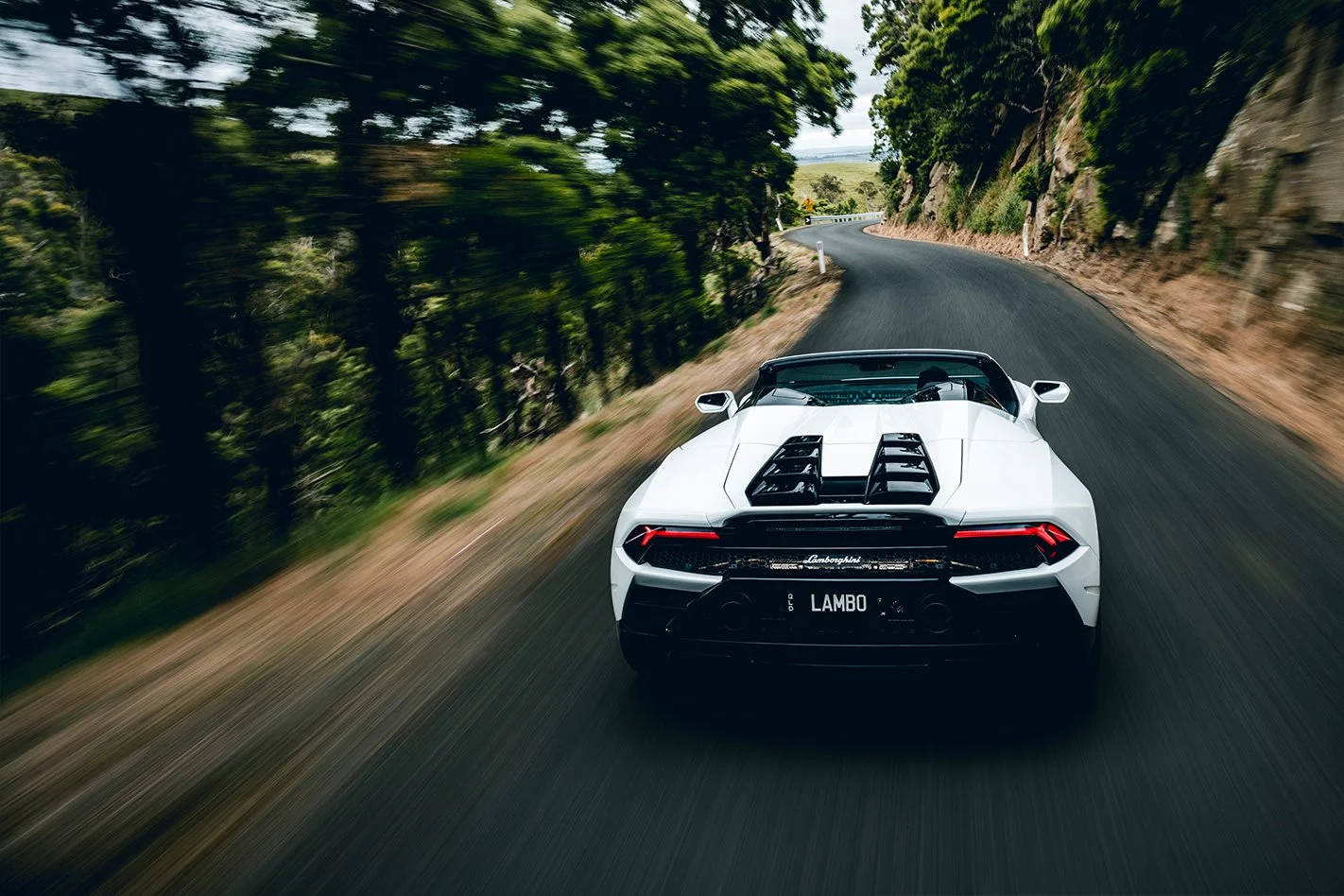
The Lamborghini Huracán (2014–2024) stands as Sant'Agata Bolognese's most successful V10 supercar, producing over 25,000 units across 13 road-going variants and three racing specifications. Powered by a naturally aspirated 5.2-liter V10 ranging from 580 to 640 CV, the model evolved from the all-wheel-drive LP 610-4 foundation to encompass rear-wheel-drive purist variants, the ALA-equipped Performante, the technologically advanced EVO generation, and extreme track-focused specials including the STO and off-road Sterrato.
Dominating GT3 competition with 187+ race victories and 96 championships—including three consecutive Daytona 24 Hours wins—the Huracán served as a testbed for innovations like the LDVI predictive chassis control and CCM-R racing brakes, bridging motorsport technology with road-legal performance.
Historical Genesis and Model Timeline
1.1 Introduction and Gallardo Succession
2014 Geneva Motor Show Debut
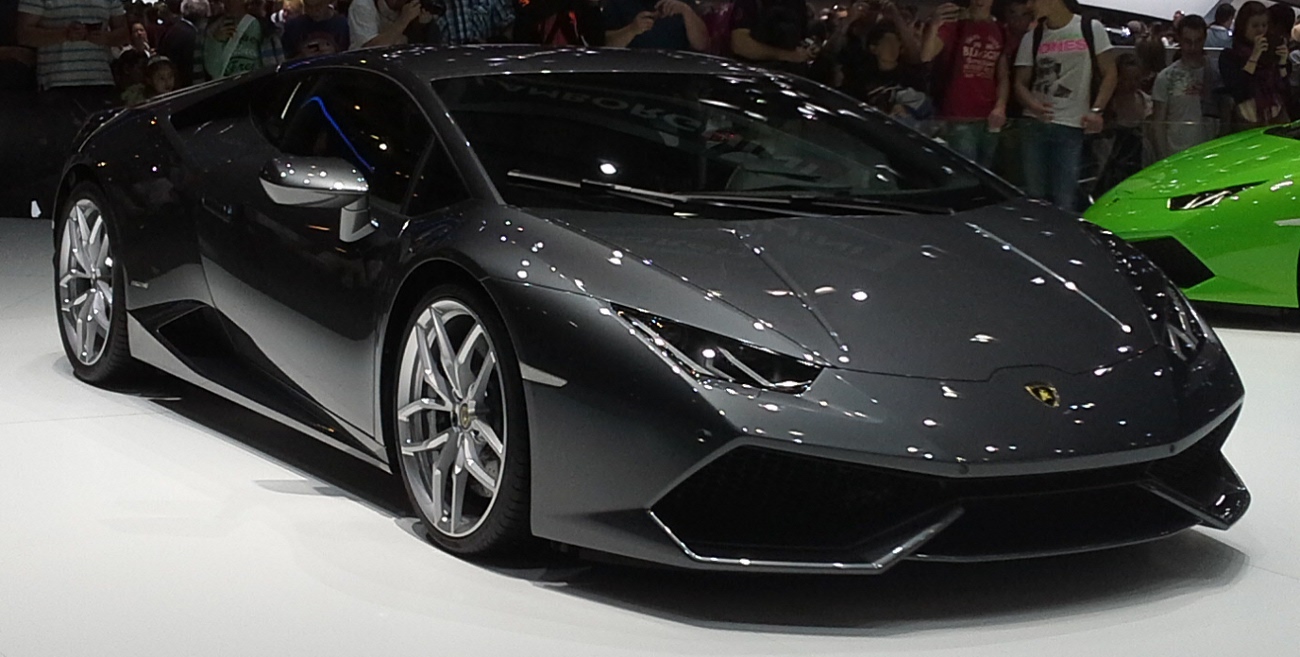
The Lamborghini Huracán LP 610-4 debuted at the 2014 Geneva Motor Show, marking a decisive technological evolution from the Gallardo, which had established itself as the brand's most commercially successful model with over 14,000 units produced during its decade-long tenure.
Named after a legendary fighting bull from 1879 renowned for its courage, the Huracán was tasked with replacing not merely a successful road car but an entire ecosystem of racing variants that had dominated GT competition for eight years.
Design Philosophy Under Audi Ownership
Hexagonal Motifs
Inspired by carbon atom crystalline structure
German Precision
Audi engineering with Italian flair
Lightweight Design
1,422 kg dry weight with 50% rigidity increase
1.2 Model Evolution Timeline
LP 610-4 Foundation
Performante
STO
Technical Specifications and Powertrain Architecture
2.1 Engine Specifications
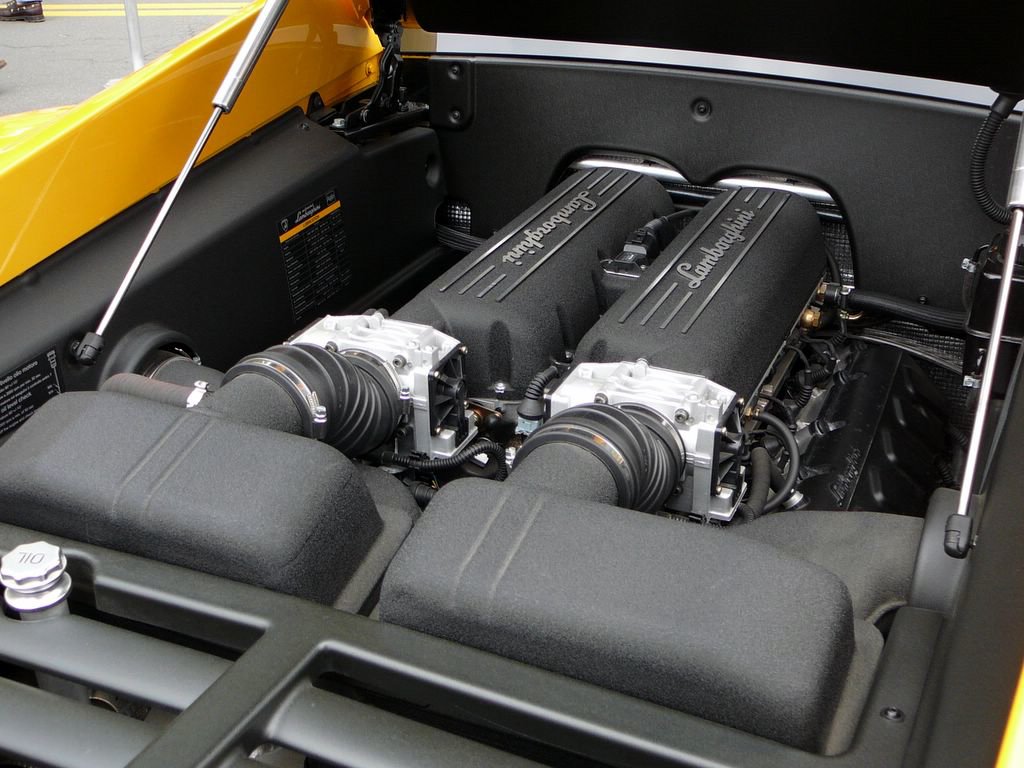
5.2-Liter Naturally Aspirated V10 (L539)
- 90-degree cylinder bank angle
- Dry-sump lubrication system
- Dual overhead camshafts with VVT
- "Iniezione Diretta Stratificata" dual injection
| Variant | Power (CV) | Torque (Nm) | RPM (Power) | Configuration |
|---|---|---|---|---|
| LP 580-2 | 580 | 540 | 8,000 | RWD |
| LP 610-4 | 610 | 560 | 8,250 | AWD |
| Performante | 640 | 600 | 8,000 | AWD |
| STO | 640 | 565 | 8,000 | RWD |
2.2 Transmission and Drivetrain Systems
7-Speed Dual-Clutch LDF
- • Wet-clutch design with <50ms shift times
- • Three operating modes: Strada, Sport, Corsa
- • Launch control functionality
- • Transaxle placement for optimal weight distribution
Drivetrain Configurations
All-Wheel Drive
Haldex Gen V system with variable torque distribution (100% rear to 50:50)
Rear-Wheel Drive
Mechanical limited-slip differential with P-TCS on EVO RWD
2.3 Weight Management Analysis
Weight Progression Across Variants
Design Evolution and Visual Identity
3.1 Exterior Design Language
Hexagonal Motifs and Y-Shaped LED Signatures
The Huracán's design language, established by Filippo Perini and evolved by Mitja Borkert, centered on hexagonal geometric motifs inspired by the carbon atom's crystalline structure—a visual language that permeated every exterior and interior element.
The full-LED headlight assemblies featured Y-shaped daytime running light signatures that became instantly recognizable as Lamborghini design elements, evolving from simple LED strips in early models to complex three-dimensional arrangements in later EVO and STO variants.
"The Gandini Line—a sharp crease rising from the front wheel arch to the roof pillar—referenced Marcello Gandini's designs for the Countach and Miura."
Design Evolution Stages
LP 610-4 (2014)
Trapezoidal central intake with hexagonal mesh, rounded air intakes, and integrated rear spoiler
Performante (2017)
Large fixed rear wing with ALA system, aggressive splitters, and Forged Composite elements
EVO (2019)
Y-shaped lower splitter with air curtains, revised rear diffuser with integrated wing
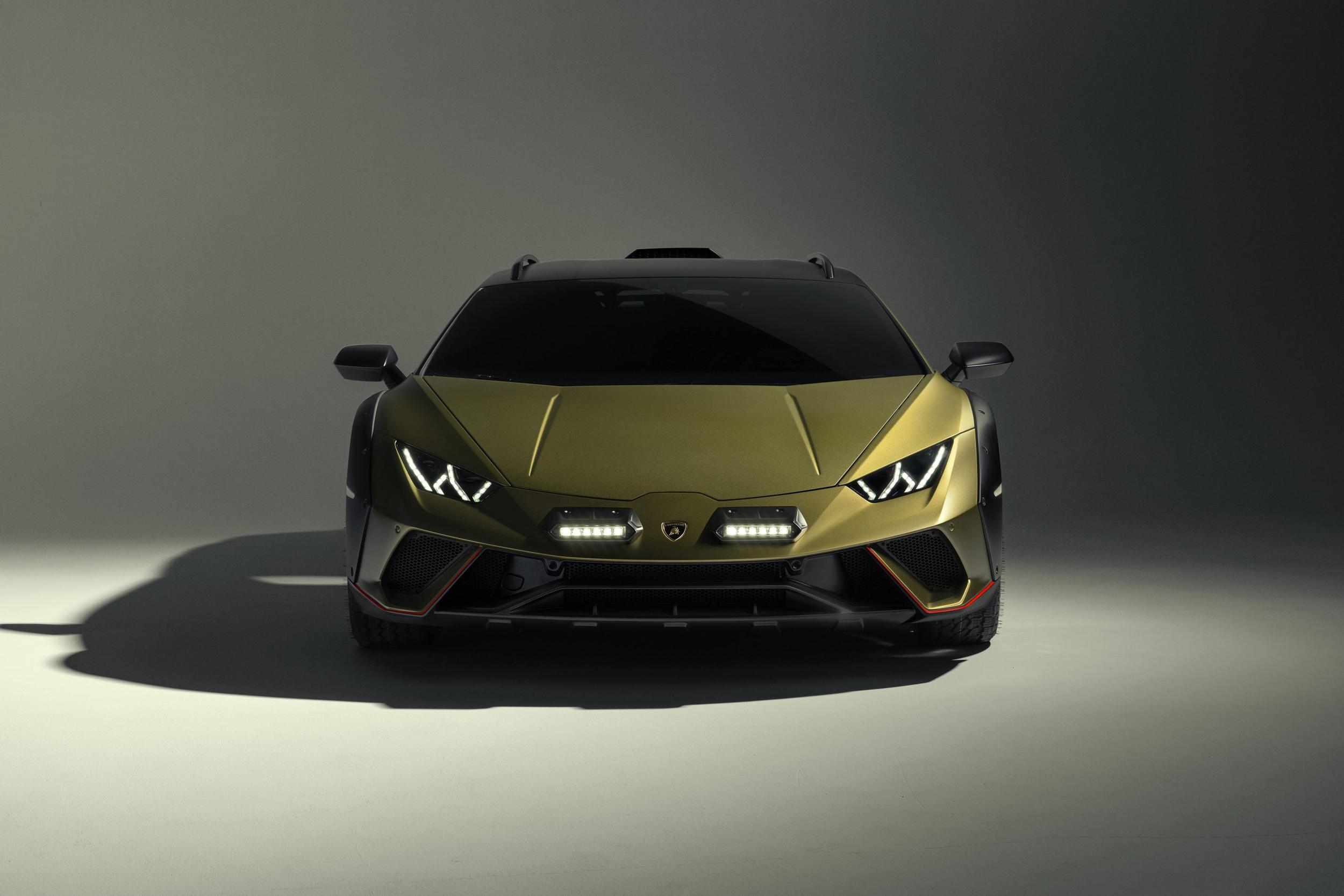
STO (2021)
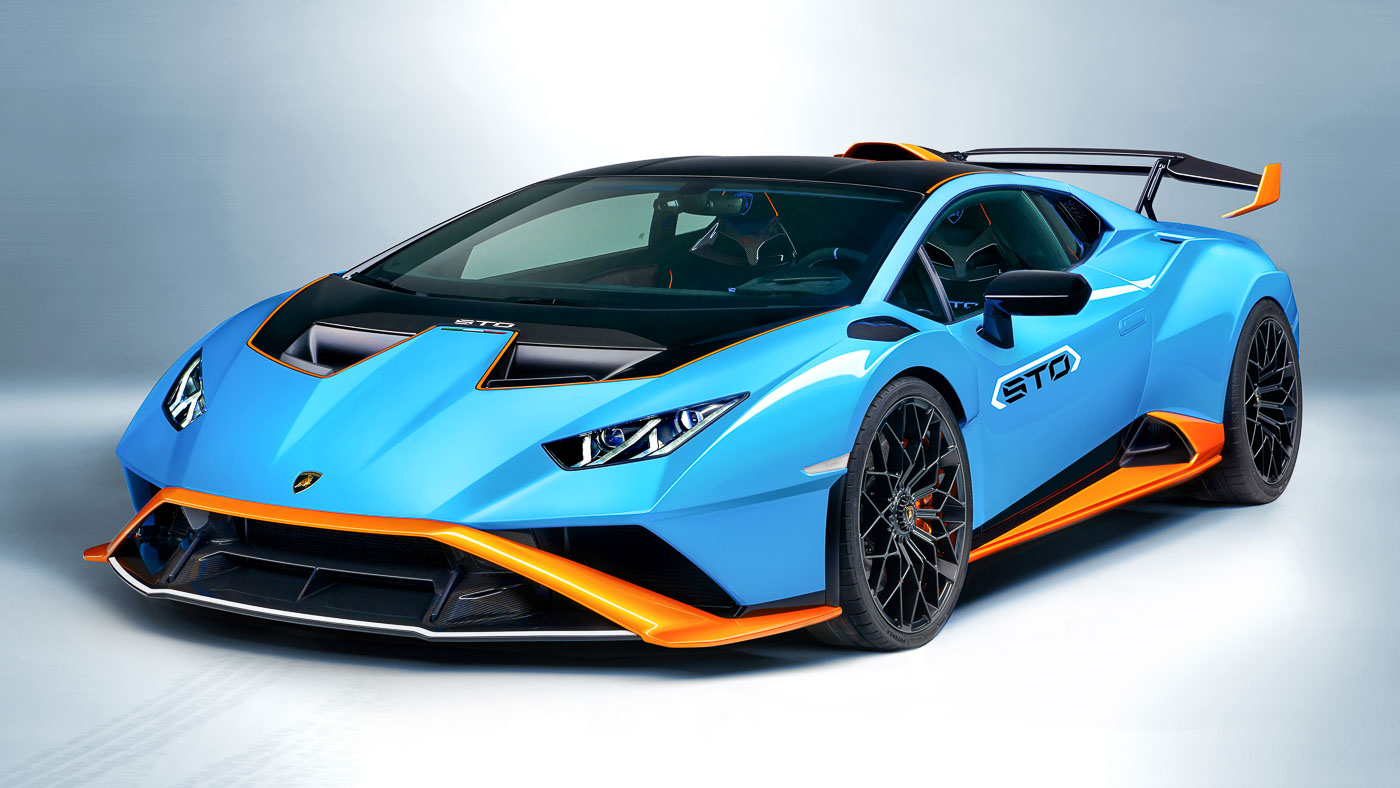
Cofango integrated front hood/fenders, swan-neck rear wing, NACA ducts
3.2 Aerodynamic Development Stages
Fixed Aerodynamics
Early LP 610-4 models utilized fixed aerodynamic elements generating approximately 50-70 kg of downforce at 200 km/h.
ALA System
Performante introduced active aerodynamics with electronically actuated flaps switching between low-drag and high-downforce configs in <500ms.
STO Aero Package
Fixed, race-derived elements optimized for track use with manually adjustable rear wing generating 450 kg downforce at 280 km/h.
3.3 Interior Architecture and Materials
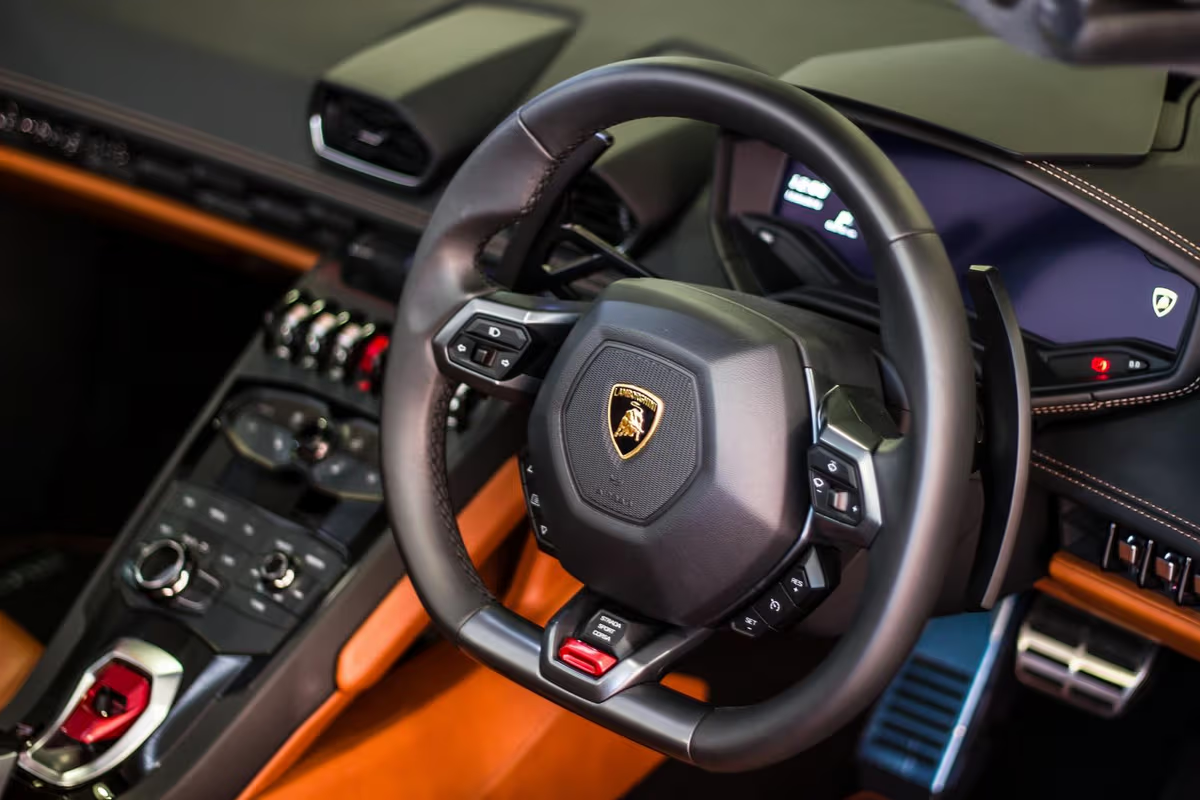
Material Progression
Cockpit Technology Evolution
LP 610-4 (2014)
12.3-inch TFT digital instrument cluster - first in Lamborghini production car
EVO (2019)
8.4-inch capacitive touchscreen with Apple CarPlay and Android Auto integration
STO (2021)
Minimalist race-inspired layout with integrated mode selectors and telemetry display
Key Innovations
- • Steering wheel-mounted mode selectors
- • Configurable digital instrument cluster
- • Haptic feedback controls
- • LDVI vehicle dynamics interface
Comparative Analysis of Road-Going Variants
4.1 Drivetrain Philosophy Comparison
AWD Philosophy: Maximum Traction
RWD Philosophy: Driver Engagement
EVO Generation: LDVI System Integration
EVO AWD Integration
- • Coordinates four-wheel steering with Haldex coupling
- • Virtual wheelbase extension for high-speed stability
- • Predictive torque vectoring between all four wheels
- • Enhanced cornering grip and stability
EVO RWD Calibration
- • Focused rear axle dynamics optimization
- • Enhanced oversteer tolerance and slide control
- • Simplified architecture without front axle complexity
- • P-TCS calibration for drift facilitation
4.2 Track-Focused Hierarchy Analysis
Performante
Tecnica
STO
| Metric | Performante | Tecnica | STO |
|---|---|---|---|
| Power-to-Weight (kg/CV) | 2.16 | 2.15 | 2.09 |
| Downforce at 280 km/h | ~300 kg | Moderate | 450 kg |
| 0-100 km/h | 2.9s | 3.2s | 3.0s |
| Top Speed | 325 km/h | 325 km/h | 310 km/h |
4.3 Special Capability Models
Sterrato: Off-Road Innovation
Spyder Variants: Open-Air Experience
Motorsport Heritage: Squadra Corse Programs
5.1 Lamborghini Squadra Corse Establishment
2013
Squadra Corse established within Sant'Agata Bolognese headquarters
Vertical Integration
Racing vehicle construction integrated into standard production line
400th Racing Huracán
Produced by March 2021, representing 15% of total production
"Unlike previous eras where Lamborghini relied on third-party tuners, Squadra Corse integrated racing vehicle construction into the standard production line, with specialized technicians overseeing the assembly of competition vehicles alongside road cars."
5.2 Huracán GT3 Program Evolution
First Generation GT3 (2015-2018)
GT3 EVO (2019-2021)
GT3 EVO2 (2022-Present)
5.3 Super Trofeo Single-Make Championship
LP 620-2 Super Trofeo Specification
Championship Structure
- • Three continental series: Europe, North America, Asia
- • Annual World Final event
- • Categories: Pro, Pro-Am, Am, LB Cup
- • Two 50-minute sprint races per weekend
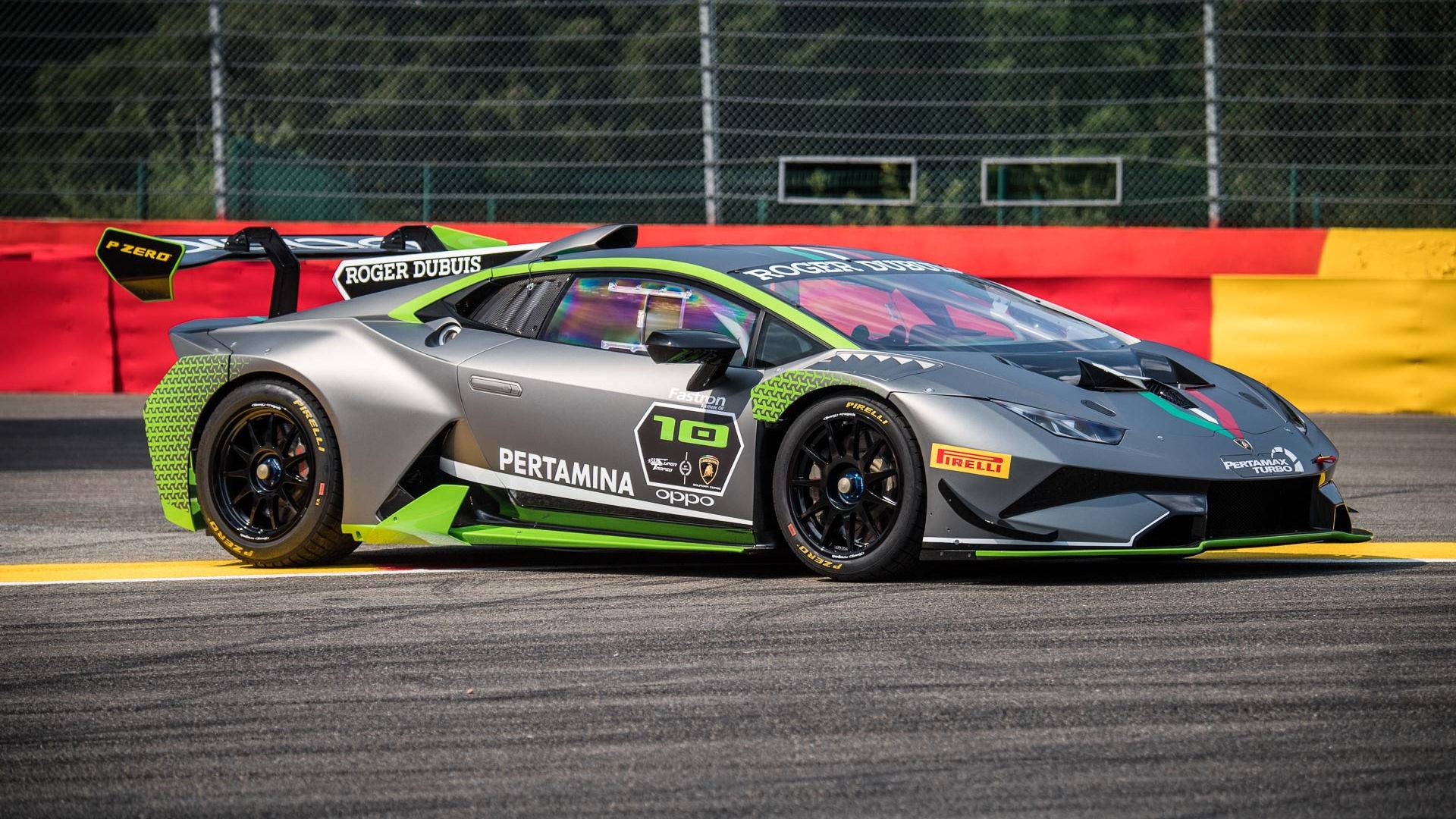
Driver Development Pipeline
Over 1,383 drivers have competed in 563 races since 2009, serving as Lamborghini's primary talent development program.
Notable graduates include Loris Spinelli, who progressed to Lamborghini GT3 factory driver status in 2023.
GT3 vs. Super Trofeo Technical Distinctions
Weight
Aerodynamics
Adjustable aero for endurance optimization
Fixed configuration for sprint racing
Engine
520-580 CV (BoP restricted)
620 CV (unrestricted)
Racing Achievements and Notable Victories
6.1 IMSA WeatherTech SportsCar Championship Dominance
24 Hours of Daytona: Three Consecutive Victories (2018-2020)
12 Hours of Sebring Success
Championship Titles
6.2 Global GT3 Competition Records
Blancpain GT Series / GT World Challenge Europe Success
2019 "Triple Crown" Achievement
Unprecedented achievement winning all three available titles in a single season, with the Sprint Cup decided by countback after a tie following the final round at Hungaroring.
6.3 Super Trofeo Racing Milestones
Factory Driver Development Program
Program Statistics (2025)
Primary talent development pipeline with structured progression from amateur to professional GT3 racing.
Notable Graduate
Loris Spinelli - progressed from Super Trofeo to Lamborghini GT3 factory driver status in 2023.
Numerous drivers have secured seats in IMSA and GT World Challenge competition through this development pathway.
2025 Season Champions
North America
Europe
Championship Structure
- • Pro: Professional drivers
- • Pro-Am: Mixed professional/amateur pairings
- • Am: Gentleman drivers
- • LB Cup: Entry-level category
6.4 Production and Participation Milestones
400th Racing Huracán
Milestone celebrated by President Stephan Winkelmann, CTO Maurizio Reggiani, and Head of Motorsport Giorgio Sanna.
Global Customer Network
Global expansion with teams on every continent in major championships.
Technical Innovations: From Track to Road
7.1 Aerodynamic Technology Transfer
STO Aerodynamic Innovations
Cofango Design
Single-piece carbon fiber component integrating front hood and fenders, derived directly from Super Trofeo and GT3 racing programs to reduce weight and optimize aerodynamic efficiency.
Swan-Neck Wing Mounts
Aluminum alloy pillars (Ergal 7075 T6) inspired by GT3 EVO2 design, allowing greater precision in aerodynamic adjustment with three manually selectable positions.
NACA Duct Integration
High-efficiency cooling ducts integrated directly into the Cofango surface, providing brake and radiator cooling with minimal drag penalty.
Aerodynamic Performance
Performante"] B --> F["Cofango Design
STO"] C --> G["Flat Floor
Huracán Range"] C --> H["Diffuser Fins
STO"] D --> I["NACA Ducts
STO"] D --> J["Side Intakes
EVO"] E --> K["Road Car Application"] F --> K G --> K H --> K I --> K J --> K
7.2 Advanced Materials and Construction
Forged Composite Technology
Magnesium Wheels
Titanium Fasteners
Material Science Impact on Performance
7.3 Powertrain and Thermal Management
Racing Intake and Exhaust Technology
Individual Throttle Bodies
GT3 EVO2's adoption of electronically controlled throttle bodies for each cylinder improved throttle response and enabled more precise traction control calibration.
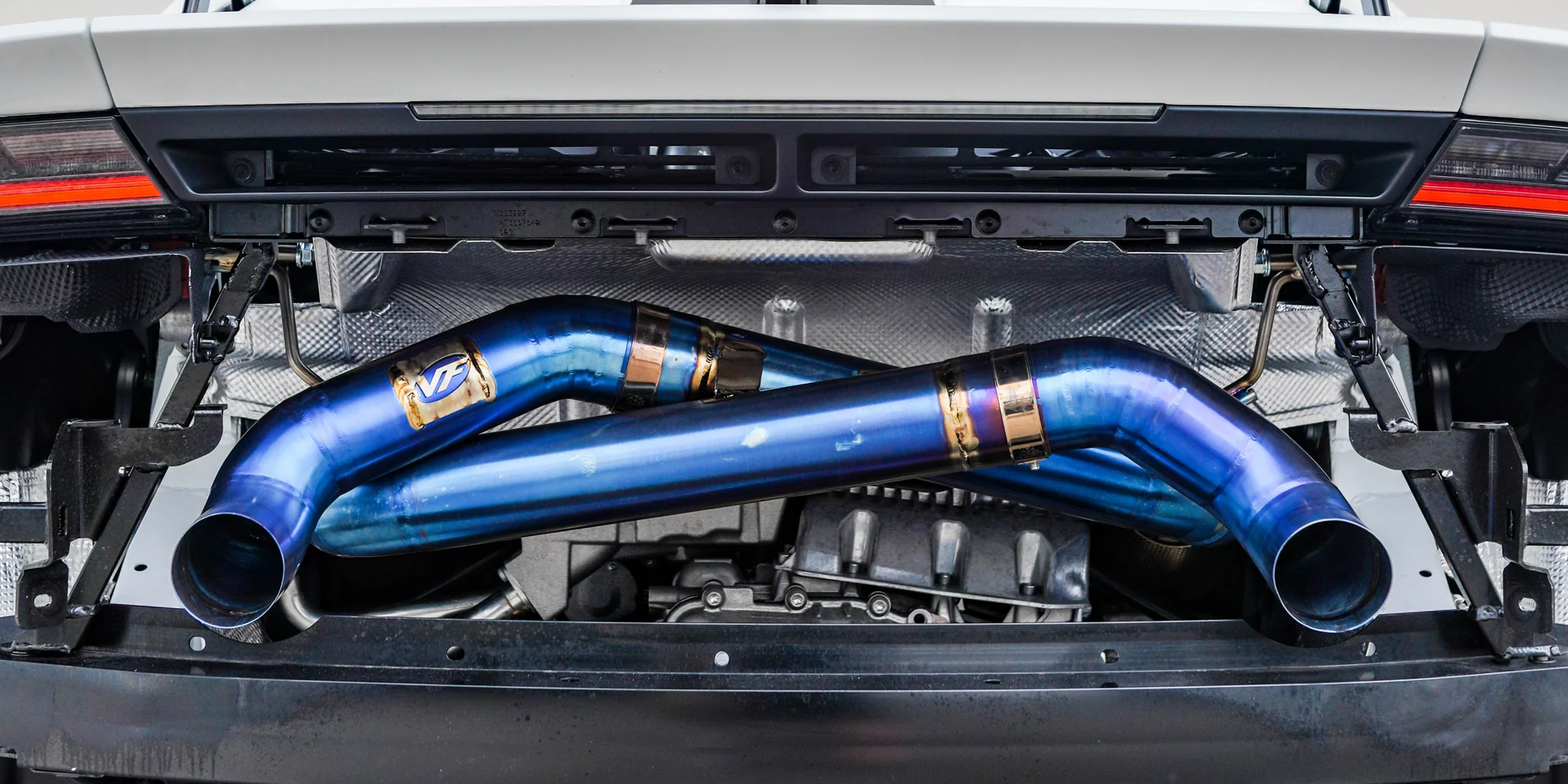
Capristo Exhaust Systems
Racing exhaust systems engineered with AISI T309 stainless steel alloys capable of withstanding temperatures exceeding 600°C, influencing street-legal exhaust options.
Engine Mapping Expertise
Thousands of kilometers of racing data contributed to STO's sharp throttle mapping and enhanced drivability across varying conditions.
Enhanced Cooling Packages
- • Carbon fiber radiators replacing fiberglass units
- • Optimized airflow routing to front radiators
- • Enhanced cooling capacity for 24-hour endurance
- • Direct influence on road car thermal management
7.4 Braking and Safety Systems
CCM-R Racing Brake Technology
FIA Safety Cell Integration
7.5 Electronics and Driver Assistance
LDVI: Lamborghini Dinamica Veicolo Integrata
Predictive Logic
Anticipates vehicle behavior based on steering angle, throttle position, and lateral acceleration.
Technology Transfer
Adapted from GT3 traction control systems with ten+ selectable positions and extensive racing data.
Accessibility Focus
Designed to be "easier and more predictable for gentlemen drivers" while offering adjustability for experts.
Four-Wheel Steering Integration
- • LAWS system coordination strategies from Super Trofeo EVO2
- • Rapid direction change optimization
- • High-speed stability enhancement
- • Virtual wheelbase extension/contraction
Human-Machine Interface
- • Steering wheel interface design from racing programs
- • Comprehensive data logging capabilities
- • Real-time adjustable vehicle parameters
- • Enhanced telemetry display in STO and Tecnica