Many people confuse a business proposal and a business plan, even though they have different purposes. Using the wrong document can make it harder to win clients, secure funding, or present your business ideas clearly. Understanding the difference helps you choose the right document for every situation. Keep reading to explore the differences between a business proposal and a business plan.
Overview of business plans vs. business proposals
Business plans and business proposals may seem similar because they both describe business ideas, goals, and strategies, but they are created for different purposes. A business plan focuses on guiding a company's growth, operations, and financial direction, while a business proposal is designed to present a specific offer or solution to clients, investors, or partners. The table below highlights the key differences between these two important business documents.
| Aspect | Business Plan | Business Proposal |
|---|---|---|
| Main focus | Focuses on how the business will operate, grow, and achieve success. | Focuses on solving a specific problem and explaining the value of a proposed solution. |
| Audience | Usually created for business owners, management teams, investors, lenders, and stakeholders. | Usually prepared for potential clients, business partners, or investors interested in a specific opportunity. |
| Content | Includes sections such as market analysis, customer research, marketing strategy, operations, and financial projections. | Includes details such as problem statement, proposed solution, project scope, pricing, timeline, and terms. |
| Purpose of use | Used for planning, decision-making, securing funding, and managing business growth. | Used for winning projects, securing deals, building partnerships, and generating sales opportunities. |
| Approach | Provides an overall roadmap for the company's present and future direction. | Provides a targeted pitch designed to encourage a specific action or agreement. |
What is a business plan
A business plan is a document that explains your business idea, goals, target market, and how you plan to achieve success. It also includes details about your products or services, finances, and growth strategy. Business owners use it to guide decisions, attract investors, or secure funding. A clear business plan helps keep your business organized and focused on long-term success.
Business plan structure
A well-structured business plan organizes your ideas, strategies, and goals into clear sections that make your vision easier to understand. Each component focuses on an important part of your business, from planning and operations to finances. Below are the key sections included in a typical business plan structure:
Executive summary
The executive summary provides a brief overview of your entire business plan, including your business idea, goals, products or services, and growth plans. It is usually the first section investors read to understand your business quickly. Although it appears first, it is often written after completing the other sections.
Business description & overview
This section explains what your business does, including its mission, vision, history, and the problems it aims to solve. It provides details about your products or services and highlights what makes your business unique. This helps readers understand the foundation and purpose of your company.
Market research & analysis
Market research and analysis show your understanding of the industry, market trends, and business opportunities. It includes information about market size, customer demand, and factors that may affect your growth. This section helps prove that your business idea has potential.
Customer analysis
Customer analysis focuses on identifying your target audience and understanding their needs, preferences, and buying behavior. It explains who your ideal customers are and why they would choose your products or services. This information helps you create better marketing and business strategies.
Competitive analysis
Competitive analysis examines your competitors, their strengths, weaknesses, and position in the market. It helps you identify how your business can stand out and offer better value to customers. Understanding competitors allows you to make smarter strategic decisions.
Marketing strategy & plan
This section explains how you will attract, engage, and retain customers. It covers your pricing, promotion methods, sales channels, and branding strategies. A strong marketing plan helps turn potential customers into loyal buyers through effective campaigns and consistent customer relationships.
Operations plan
The operations plan describes how your business will run daily. It includes details about processes, resources, suppliers, technology, and other activities needed to deliver your products or services. This section shows how your business will operate efficiently.
Management team
The management team section introduces the people responsible for running and growing the business. It highlights their skills, experience, and roles within the company. A strong team can increase confidence among investors and partners.
Financial projections & plan
This section provides estimates of your business's financial performance, including revenue, expenses, profits, and cash flow. It helps investors understand the potential return and financial stability of your business. Accurate projections also support better financial decisions.
Appendix
The appendix contains additional information that supports your business plan, such as charts, research data, legal documents, resumes, or product details. It keeps the main plan clear while providing extra evidence when needed. This section is useful for readers who want more detailed information.
What is a business proposal
A business proposal is a document created to present an offer, solution, or partnership opportunity to potential clients, investors, or business partners. It explains how your products or services can solve a specific need while outlining costs, benefits, and terms. The main goal of a business proposal is to persuade the reader to take action or start a business relationship.
Business proposal structure
A well-prepared business proposal follows a clear structure that helps present your offer professionally and convincingly. Each section has a specific purpose, from introducing your idea to explaining costs, benefits, and the next steps. Below are the key components that make a business proposal effective:
Title page
The title page provides the basic details of your proposal, including the proposal name, company name, client information, and submission date. It creates the first impression and helps the reader quickly identify the purpose of the document. A clean and professional title page improves the overall presentation.
Executive summary/proposal summary
The executive summary gives a brief overview of the proposal, highlighting the main idea, objectives, and value you offer. It allows the reader to understand the proposal's purpose without reviewing every detail. A strong summary focuses on the benefits and reasons to consider your offer.
Problem or need statement
This section explains the specific problem, challenge, or need that the client or partner is facing. It shows that you understand their situation and identifies why a solution is necessary. A clear problem statement builds trust and creates a connection with the reader.
Proposed solution
The proposed solution describes how your product, service, or idea can address the identified problem. It explains your approach, key benefits, and why your solution is suitable for the client's needs. This section focuses on the value and results you can provide.
Project scope & deliverables
This section defines the work included in the proposal and the specific outcomes you will deliver. It explains the responsibilities, tasks, and expectations for both parties. A clear scope helps prevent confusion and keeps the project on track.
Timeline & implementation plan
The timeline and implementation plan explain how and when the project will be completed. It includes important milestones, deadlines, and steps required to deliver the proposed solution. This helps the client understand the process and expected progress.
Pricing & cost breakdown
This section provides details about the costs, fees, and expenses involved in completing the project. It explains the pricing structure and what the client receives in return for their investment. Transparent pricing helps build confidence and supports better decision-making.
Company qualifications
The company qualifications section highlights your experience, skills, achievements, and past work. It shows why your company is capable of delivering the proposed solution successfully. This information helps establish credibility and trust with potential clients.
Terms & conditions
This section outlines the rules, agreements, payment terms, responsibilities, and other important conditions of the proposal. It ensures both parties understand their commitments before starting the project. Clear terms help avoid misunderstandings later.
Call to action / next steps
The call to action explains what the reader should do after reviewing the proposal. It may include scheduling a meeting, approving the project, signing an agreement, or moving forward with the next stage. A clear next step encourages faster responses and decisions.
Examples of business plans vs. business proposals
Business plans and business proposals are used in different situations, depending on the goals, audience, and purpose of the document. While a business plan focuses on the overall direction and future growth of a company, a business proposal is usually created to present a specific offer or opportunity. The examples below show how both documents are used in real-world scenarios.
| Aspect | Business plan examples | Business proposal examples |
|---|---|---|
| Startup planning | A founder creates a detailed plan outlining a new SaaS business, including market research, customer segments, pricing strategy, operations, and financial projections. | A software company submits a proposal to a potential client explaining how its SaaS solution can solve the client's workflow problems. |
| Business expansion | A retail company develops a growth plan to enter a new market, covering target customers, competitors, marketing strategy, resources, and expected revenue. | A company presents a proposal to a business partner for a joint expansion project, including collaboration details, responsibilities, and expected benefits. |
| Product launch | A company creates a product launch plan to evaluate market opportunities, define positioning, estimate costs, and plan distribution channels. | A marketing agency sends a proposal to a client outlining a product launch campaign, services, timeline, and pricing. |
| Funding request | An entrepreneur prepares a business plan to explain the company vision, business model, market opportunity, and financial forecasts to investors or lenders. | A company creates an investment proposal to request funding for a specific project, explaining the opportunity, expected returns, and investment terms. |
| Internal strategy | A management team uses a business plan to align departments, set goals, and guide long-term decision-making. | A team creates an internal proposal to request approval for a specific initiative, such as adopting new software or launching a new program. |
When to use business plans and business proposals
Business plans and business proposals are useful in different situations because they serve different goals. A business plan helps guide your company's long-term direction, while a business proposal focuses on presenting an offer or solution to a specific audience. Choosing the right document depends on whether you are planning growth, seeking funding, or trying to win a business opportunity.
| Scenario | Use a business plan | Use a business proposal |
|---|---|---|
| Launching a new company | Create a roadmap that explains the business idea, market opportunity, operations, goals, and financial expectations. | Not typically used because there is no specific client or project to present an offer to. |
| Seeking investors or loans | Present your vision, business model, market research, and financial projections to attract funding. | Create a funding proposal when requesting investment for a specific project or opportunity. |
| Setting annual strategy or budgets | Define company goals, growth plans, resource needs, and financial targets for future decisions. | Not usually required, because proposals focus on external opportunities rather than internal planning. |
| Pitching services to a client | Not suitable because it focuses on overall company direction instead of a specific customer need. | Present your solution, pricing, timeline, and benefits to convince a client to work with you. |
| Responding to an RFP (Request for Proposal) | Provides background information about your company but is not the main document for the response. | Submit a detailed proposal that addresses the client's requirements, solution, costs, and deliverables. |
| Renewing or upselling existing clients | Helps guide long-term business growth and customer strategies. | Explain additional services, improvements, pricing, and value to encourage continued business. |
| Partnering with another company | Provides a high-level view of your goals, capabilities, and growth plans. | Used for a specific partnership opportunity by explaining roles, benefits, and collaboration terms. |
How the two work together
A business plan and a business proposal serve different purposes, but they become more effective when used together. One helps you understand your business direction, while the other helps you communicate your value to external audiences. The insights, goals, and strategies developed in your business plan can provide the foundation for creating stronger proposals.
Your business plan gives you a clear understanding of your target market, services, strengths, and growth goals. When creating a business proposal, you can use this information to present a more convincing solution that matches a client's needs. In simple terms, the business plan helps you prepare your strategy, while the business proposal helps you turn that strategy into real opportunities.
Strengthen your plans and proposals with Kimi
Kimi Agent is an AI-powered research tool that helps users collect, analyze, and organize information from multiple sources. It generates structured insights, summarizes complex topics, and supports data-driven decisions for both business plans and proposals. By combining research capabilities with AI analysis, Kimi helps users validate ideas, understand markets, define strategies, and create well-supported documents for investors, partners, or clients.
Key features
Research markets and business opportunities: Analyze industry trends, customer needs, and market opportunities to help users evaluate ideas, identify potential directions, and develop stronger business strategies.
Analyze competitors and market positioning: Collect competitor information and industry data to understand market landscapes, compare positioning, and identify opportunities to differentiate products or services.
Structure business information into professional documents: Transform business materials, research findings, and key inputs into organized content for business plans, client proposals, investment documents, and strategic reports.
Extract insights from complex information: Summarize key findings, identify patterns, and connect relevant information to help users better understand challenges, opportunities, and business decisions.
Create tailored outputs for different business scenarios: Adapt content and recommendations for specific needs, including startup planning, business expansion, investor communication, and client-facing proposals.
How to create business plans or proposals with Kimi
Creating effective business plans and proposals requires research, clear structure, and reliable insights. Kimi helps simplify this process by organizing information, analyzing opportunities, and improving document quality. Follow these steps to create better business documents with Kimi.
Step 1: Enter your prompt
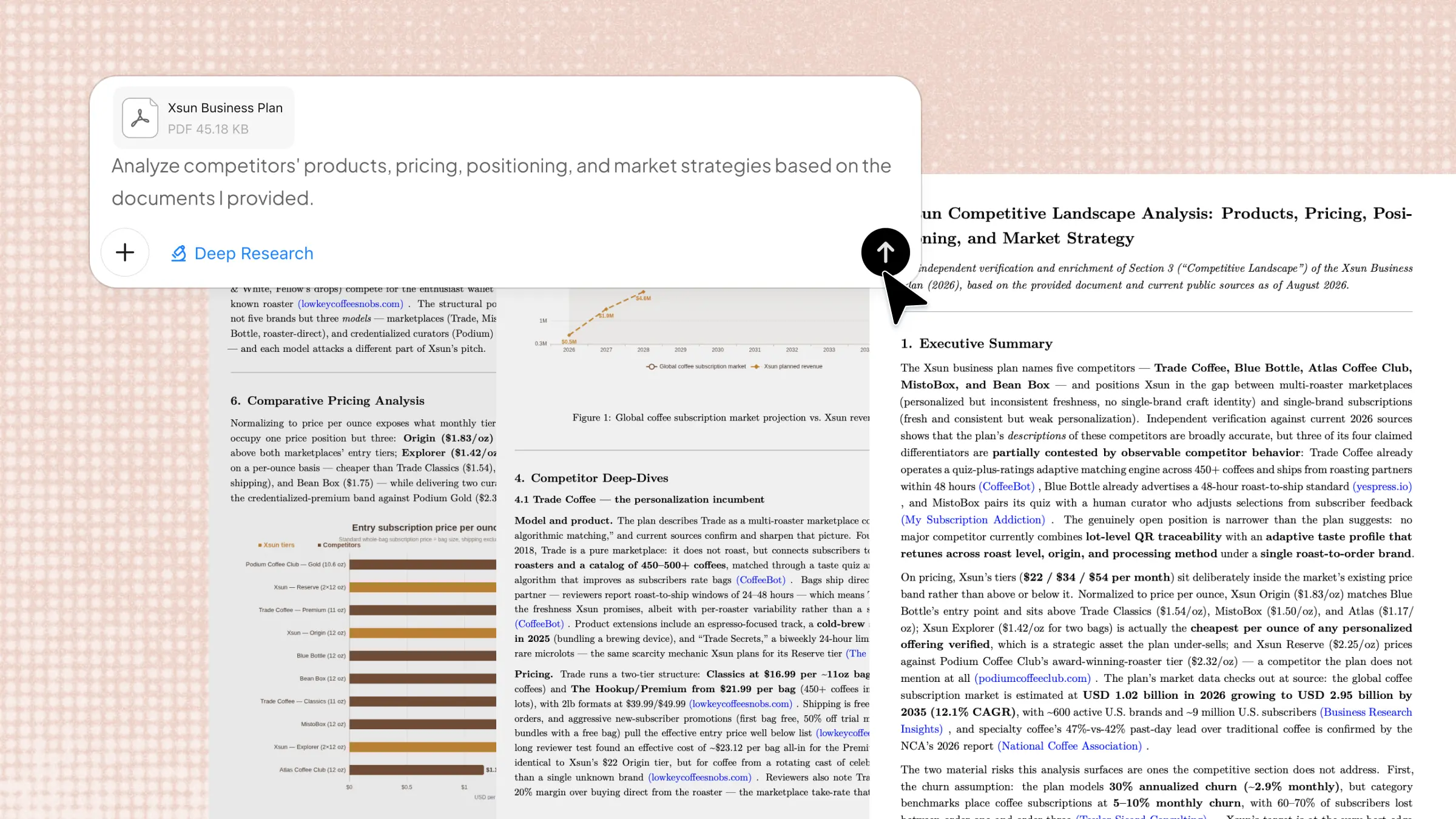
Open Kimi and start by entering a clear prompt that describes the type of business plan or proposal you need. Include important details such as your industry, goals, target audience, and required sections to get more relevant results from Kimi Deep Research.
Example prompt:
Step 2: Let Kimi process and generate results
After submitting your prompt, Kimi analyzes the information, gathers relevant insights, and organizes the findings into a structured document. The AI helps transform research data into useful sections for your business plan or proposal.
Step 3: Review and download your file
Review the generated content to ensure all details match your requirements and make any necessary changes. Once finalized, you can download the completed document and use it for planning, presentations, or business discussions.
Conclusion
Understanding when to use the right business document can help you communicate your ideas more effectively and make better business decisions. With the right research and a clear structure, you can create plans and proposals that support your goals with confidence. Kimi helps you gather reliable information, organize your ideas, and improve the quality of your documents. Try Kimi today to create professional business plans and proposals faster and with less effort.