How to Write a Business Proposal with Practical Steps

Learn how to write a business proposal with clear steps covering structure, tone, and key details clients expect. AI tools like Kimi help turn your ideas and materials into professional proposals with better organization, messaging, and presentation.

9 min read2026-08-12
How to write a business proposal with Kimi Agent

Whether you are pitching a new idea or trying to win a client, writing a proposal can feel confusing when you are not sure what to include or how to present it. Many people struggle to explain their value clearly, which can cause great opportunities to slip away. A well-written proposal makes your offer easier to understand and helps build trust from the beginning. In this article, you will learn how to write a business proposal with practical steps that make the process simple and effective.

Why do business proposals matter

Business proposals matter because they clearly explain your solution, pricing, and the value you can provide to a potential client. They help build trust, reduce confusion, and show that you understand the client's needs. A strong proposal also helps you stand out from competitors by presenting your ideas in a professional and organized way. When written well, it increases the chances of winning projects and building long-term business relationships.

What should be included in a business proposal

A strong business proposal follows a clear structure that helps clients understand your offer from beginning to end. Including the right sections makes your proposal more professional, easier to read, and more likely to achieve the desired outcome. Below are the key elements every business proposal should include:

  • Title page

Create a professional first impression with a clear title page. Include essential details such as your company name, proposal title, client name, logo, and proposal date. A clean and organized layout immediately makes your proposal appear more credible and trustworthy.

  • Executive summary

Provide a concise overview of your proposal. Introduce your company, explain your proposed solution, and highlight the key benefits and value the client will gain. Keep this section engaging so clients quickly understand your main proposal advantages.

  • Problem statement

Show your understanding of the client's challenges by clearly describing their pain points and business needs. This section demonstrates that you have researched their situation and understood their goals. Accurate problem identification shows genuine interest in solving the client's specific concerns effectively.

  • Proposed solution

Explain how your product or service addresses the client's needs. Describe your approach, methodology, project process, and expected outcomes. Use visuals, charts, or bullet points to make complex information easier to understand. Focus on practical benefits that directly support the client's desired business objectives.

  • Scope of work and timeline

Define the project deliverables, implementation steps, milestones, and completion dates. A clear scope helps set expectations and ensures both parties understand project responsibilities. Realistic timelines help avoid misunderstandings and keep the project progressing smoothly together.

  • Pricing and budget

Present your pricing structure clearly with detailed cost breakdowns. Explain what the client will receive and how your solution delivers value. Transparent pricing builds confidence and helps clients compare costs with expected results.

  • Qualifications and social proof

Introduce your company's expertise and competitive advantages. Support your claims with case studies, customer testimonials, performance metrics, certifications, or industry recognition to build credibility. Strong evidence reassures clients that your business can deliver successful project outcomes consistently.

  • Terms and conditions

Outline important business terms, including payment requirements, contract details, and service expectations. For complex projects, additional legal agreements can be provided separately. Clear terms protect both parties and reduce confusion throughout the business relationship.

  • Acceptance and call to action

End with clear next steps, such as scheduling a meeting, approving the proposal, or signing an agreement. Include contact details and signature fields when needed to move the project forward. Make responding simple so clients can confidently move ahead without unnecessary delays.

How to write an AI-powered business proposal step by step

Traditional business proposals typically require significant time investment in market research, data collection, competitive analysis, and manual writing and optimization. AI-powered tools can simplify this process by helping you gather insights, structure ideas, and create professional proposals faster.

Kimi Agent is an AI-powered proposal assistant that helps you create professional business proposals by organizing your ideas, materials, and supporting information. It can incorporate relevant market insights and client details to strengthen your proposal structure, messaging, and value presentation. Here's how to write a business proposal sample with Kimi.

Step 1: Enter a detailed business proposal prompt

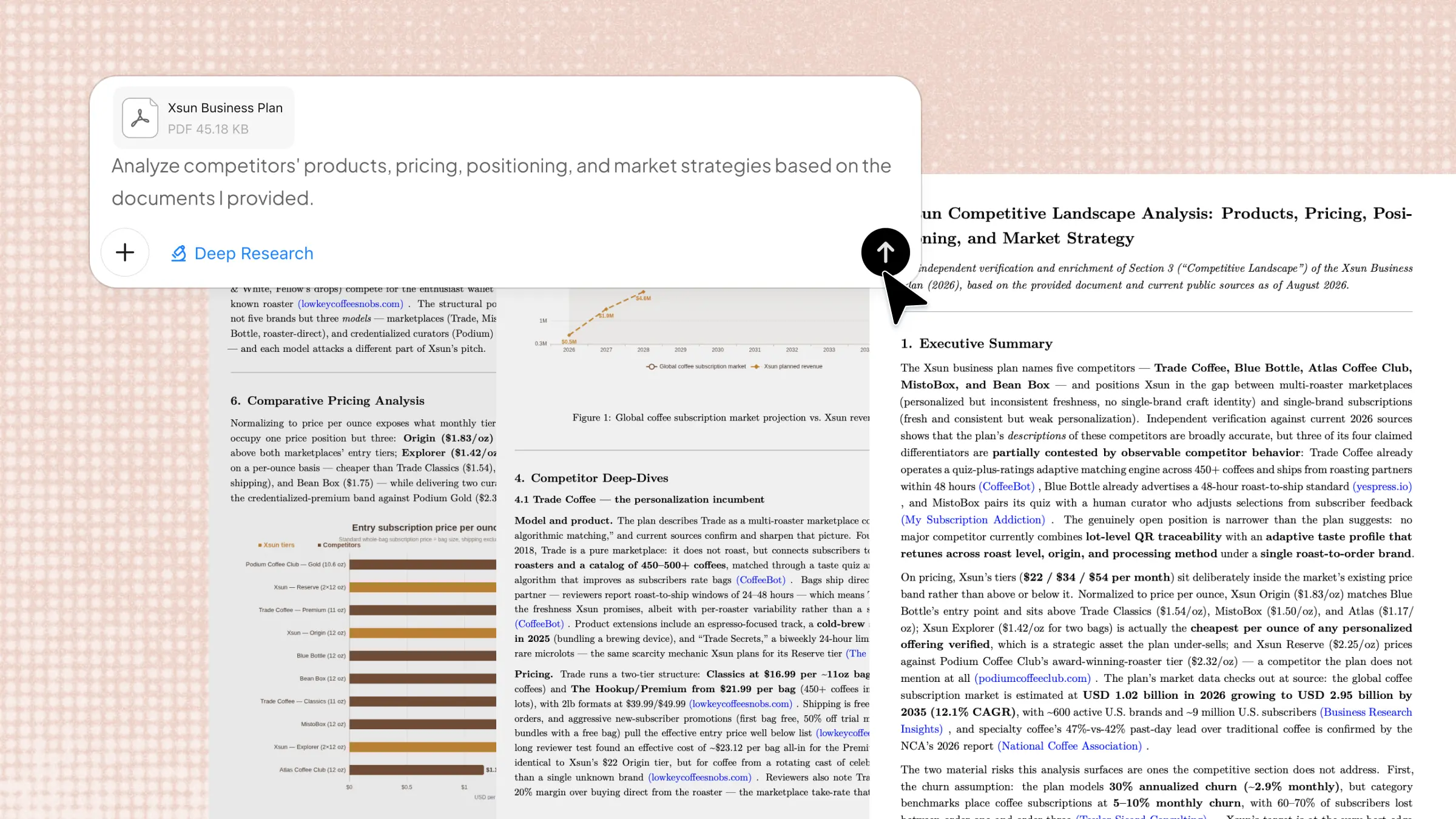
Open Kimi and describe your proposal goals, client background, business needs, target audience, proposed solution, project requirements, budget expectations, and any specific sections you want to include. Clear instructions help Kimi understand your objectives and create a customized business proposal.

Create a professional business proposal based on the uploaded materials. Organize the provided information for a digital marketing agency offering SEO and content marketing services to an e-commerce clothing brand. Structure the proposal with an executive summary, proposed solution, timeline, pricing, and call to action. Use a professional, client-focused tone and export the final proposal as a polished, ready-to-share document.
Enter a detailed business proposal prompt

Step 2: Let Kimi research and generate your business proposal

Kimi Agent analyzes your instructions, gathers relevant information on industries, market conditions, client background, and competitors, then generates a structured proposal draft with key sections such as an executive summary, problem statement, proposed solution, timeline, pricing, and terms.

Let Kimi research and generate your business proposal

Step 3: Refine your business proposal with natural language instructions

Review the generated proposal and ask Kimi to make improvements using simple instructions. You can rewrite sections, adjust the tone, add supporting details, or strengthen your solutions without manually editing the document.

Refine your business proposal with natural language instructions

Step 4: Preview and export your final business proposal

Once your proposal draft is refined, preview the document, make final adjustments, and export it in multiple formats, including Word, PDF, Excel, PowerPoint, and interactive HTML, making it easy to share proposals across different platforms and use cases.

Preview and export your final business proposal

Key features of Kimi for business proposals

Beyond helping you generate a business proposal draft, Kimi supports the entire proposal creation process, from research and content organization to refinement and sharing. Its key features help you build more structured, well-supported, and professional business proposals with greater efficiency.

  • Gather insights to build stronger proposals

Analyze market trends, industry developments, competitor information, and client-related details to provide useful context for creating more targeted and well-informed business proposals.

  • Transform information into professional proposal structures

Organize business requirements, research findings, and existing materials into clear sections, including executive summaries, challenges, solutions, timelines, pricing, and calls to action.

  • Enhance proposals with reliable supporting information

Integrate relevant data, references, and key findings into proposal content to improve credibility and help clients better understand the proposed value.

  • Refine and share proposals across formats

Improve proposal tone, structure, and clarity through natural language instructions, then preview and export documents in formats such as Word, PDF, PowerPoint, Excel, and interactive HTML.

Tips to write better proposals for your business

A well-written proposal is not only about good formatting but also about showing clients that you understand their goals. Small improvements in the way you present your ideas can make your proposal more convincing and professional. The following tips can help you create stronger business proposals.

  • Understand client needs first

Explain exactly how your product or service solves the client's problem. Keep your solution focused on their objectives instead of listing unnecessary features. A client-focused proposal shows that you understand their challenges and can provide a solution that fits their specific needs.

  • Highlight measurable outcomes

Whenever possible, include expected results using numbers, timelines, or performance indicators. Measurable outcomes help set clear expectations, demonstrate the potential impact of your solution, and give clients a more concrete understanding of what they can achieve.

  • Include accurate pricing details

Present your pricing simply and transparently so clients know exactly what they are paying for. Include any important cost breakdowns when necessary. Clear pricing reduces confusion and builds confidence through complete cost transparency and clarity.

  • Use professional and confident language

Write in a friendly but professional tone that is easy to understand. Avoid complicated words, exaggerated claims, or uncertain language. Confident writing helps build trust with potential clients and strengthens your overall professional reputation.

  • Proofread before sending proposals

Review your proposal carefully to fix spelling, grammar, formatting, and factual mistakes. Even small errors can make your proposal appear less professional. A final proofread ensures your document is polished and ready to send without overlooking important proposal details or errors.

Conclusion

Understanding how to prepare a business proposal gives you a better chance of presenting your ideas clearly and building trust with potential clients. With the right approach, you can create proposals that look professional, communicate real value, and support your business goals. If you want to save time while improving the quality of your proposals, Kimi Agent can help you research, organize, and draft them more efficiently.

FAQ

What is the format of a business proposal?
A business proposal usually includes a title page, executive summary, problem statement, proposed solution, scope of work, timeline, pricing, and terms. It should clearly explain the client's needs and how your offer can solve their problems. A well-organized format makes the proposal easier to understand and more professional.
What are the 4 P's of proposal writing?
The 4 P's of proposal writing are Problem, Proposal, Proof, and Price. These elements help you explain the client's challenge, present your solution, show credibility, and provide cost details. Following this structure helps create a proposal that is clear, persuasive, and focused on client needs.
How can I improve an AI-generated business proposal?
You can improve an AI-generated business proposal by reviewing the content, adding specific client requirements, refining the messaging, and including relevant examples or data. Kimi can help strengthen your proposal by analyzing market trends, industry insights, and competitor information, allowing you to create a more targeted and data-supported business proposal.
What information should I provide to AI when creating a business proposal?
When creating a business proposal with AI, provide key details such as your business background, client information, project goals, target audience, proposed solution, budget, timeline, and desired proposal structure. Kimi can further enhance the process by gathering relevant market data and industry insights, helping you develop a more comprehensive and persuasive proposal.
You Might Also Like
Business Proposal vs Business Plan: Key Differences
2026-08-12
Best AI for Business Plan: 6 Tools to Try in 2026
2026-08-12
Convert Word to PDF with Sejda Quickly & Easily
2026-08-12
A Simple Guide to Convert Word to PDF With iLovePDF
2026-08-12
A User-Friendly Guide to Convert Word to JPG with Smallpdf
2026-08-12
How to Write a Business Proposal in Simple Steps