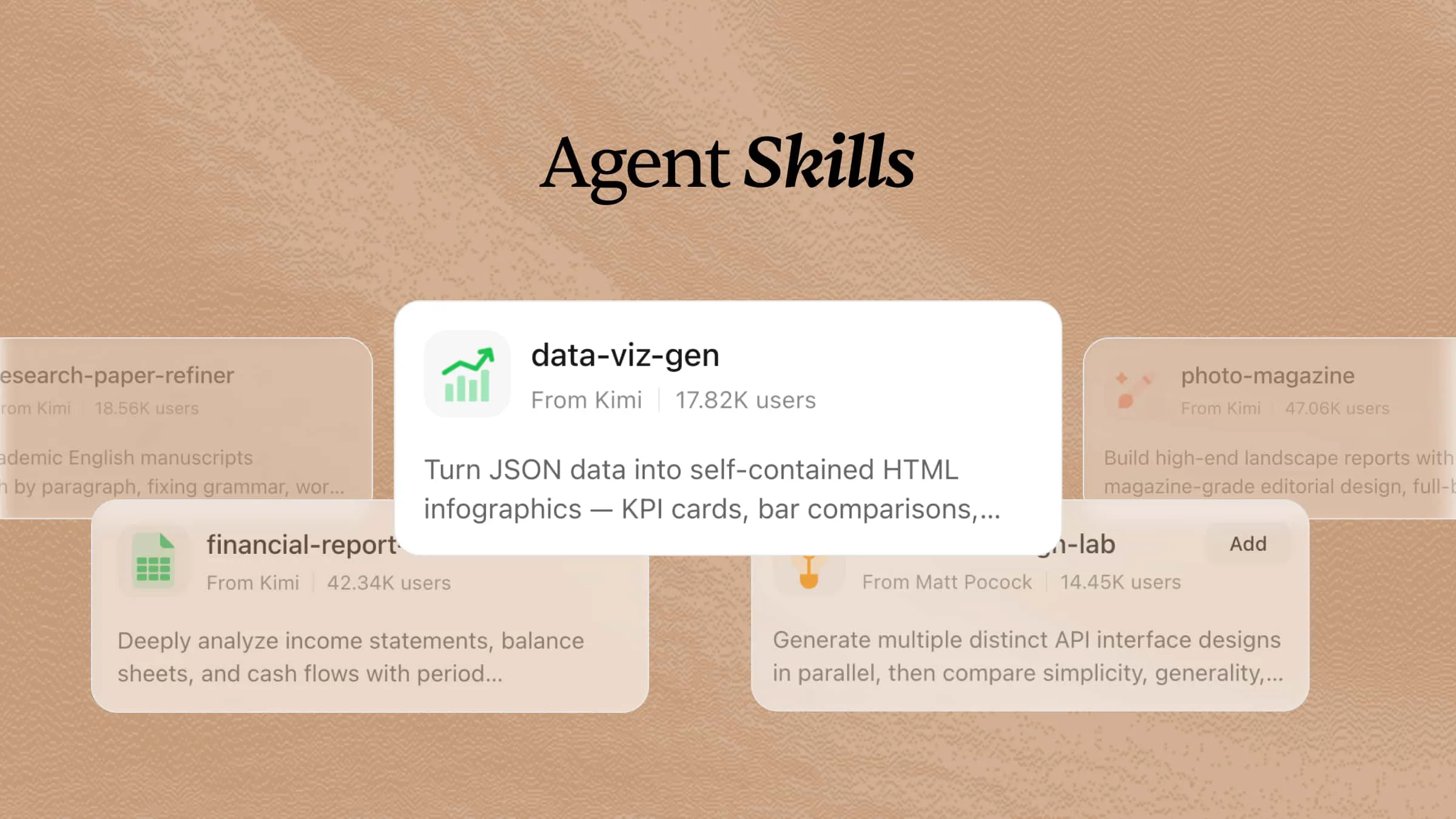
AI communication tasks often follow the same patterns, whether you are drafting emails, summarizing meetings, replying to messages, or adjusting tone for different audiences. Instead of repeating the same instructions every time, AI communication skills turn these tasks into reusable workflows that help AI produce more stable and consistent output. In this article, we will explore 26 effective communication skills for agents and see how Kimi helps you use, install, and create them more efficiently.
What are AI communication skills?
AI communication skills are specialized skills that help AI agents handle communication-related tasks more effectively. They provide predefined instructions, workflows, and quality guidelines that guide AI agents in generating consistent outputs for tasks such as email writing, meeting summaries, reply drafting, content translation, tone adjustment, and other forms of written communication.
15 AI communication skills in Kimi worth trying
If you want AI to handle communication tasks more efficiently, Kimi provides ready-to-use skills built for everyday work. These skills can help with writing emails, summarizing meetings, adapting content for different audiences, translating text, and managing inbox-related tasks with more consistency and less manual effort. Below are 16 AI communication skills in Kimi worth trying.
| Skill name | Description |
|---|---|
| professional-email-composer | Write professional business emails for reminders, follow-ups, declines, thank-yous, apologies, and more, with tone automatically adjusted for the recipient's role and bilingual Chinese-English support. |
| email-newsletter-builder | Generate professional HTML email newsletters compatible with Gmail and Outlook. Creates table-based layouts with inline CSS for reliable rendering. |
| imap-smtp-email | Manage email through IMAP and SMTP: read and search inboxes, check for new messages, fetch content, mark as read/unread, and send emails with attachments. |
| email-to-calendar | Extract calendar events and deadlines from emails and create calendar entries. Two modes: monitor your inbox directly, or process emails you forward to a dedicated address. |
| structured-minutes | Transforms raw meeting materials (transcripts, notes, chat logs) into structured minutes by automatically extracting agenda topics, discussion highlights, decisions, and action items with owners and deadlines. |
| support-response-writer | Generate professional customer support replies for pre-sale, after-sale, complaints, and returns, including emotional de-escalation strategies. |
| audience-adaptive-comms | Adapt stakeholder communication to the target audience (CEO, VP, Tech Lead, or Operations), adjusting detail level, language, and focus. Output tailored emails, briefings, or slide outlines. |
| humanizer | Remove signs of AI-generated writing from text. Use it when editing or reviewing text to make it sound more natural and human-written. |
| translation-craft | Delivers professional Chinese-English translation across academic, business, technical, and legal domains, adhering to the Faithfulness-Expressiveness-Elegance framework with rigorous quality checks. |
| work-recap-writer | Turn scattered work notes and git logs into structured weekly or monthly reports in data-driven, narrative, or OKR-aligned styles. |
| cross-platform-adapter | Adapts and repurposes content (blog posts, articles, reports, newsletters) for LinkedIn, Twitter/X, and Slack, adjusting tone, length, formatting, and language. |
| x-thread-crafter | Craft engaging Twitter/X threads from long-form content, with ≤280-character tweets, a compelling hook opener, and a clear CTA closing. |
| podcast-episode-writer | Creates complete, structured podcast scripts with timestamps for intros, segmented topics, transitions, prepared questions, and closing CTAs. |
| keynote-composer | Generates professional speech drafts for product launches, galas, TED-style talks, and more using the Rhetorical Triangle framework, with auto-annotated pause/tone/pace cues and delivery time estimates. |
| whatsapp-integration | WhatsApp integration for sending messages, managing contacts, and interacting with chats and groups. |
Use Kimi's built-in communication skills
Kimi provides built-in communication skills for different communication and content creation tasks. Below, we'll use /html-email-builder as an example to show how to activate and use a communication skill in Kimi.
Step 1: Enter a skill command
Type the skill command in the input box to activate the email design skill. For example, use /html-email-builder to create professional HTML email templates with structured layouts and compatible formatting for different email clients.
Step 2: Provide your email requirements
Describe your email purpose, target audience, content, and design preferences. Kimi will apply the selected skill to generate a structured HTML email with appropriate layouts, styling, and compatibility considerations.
Example prompt:
Kimi leverages the selected skill as a predefined workflow, interpreting your requirements and generating consistent outputs to streamline task completion.
Step 3: Review your email template
Review the generated HTML email template and request changes if needed, such as adjusting the layout, colors, content sections, or email style.
Once finalized, copy the HTML code and use it in your email marketing platform or email client.
Unlock 11 more open-source communication skills for agents
There are also open-source communication skills that can help with email replies, meeting prep, internal updates, feedback responses, and document summaries. These skills show how reusable AI workflows can be applied to everyday communication tasks in different work settings. Below are 10 open-source communication skills worth exploring if you want even more flexibility.
| Skill name | Description | URL |
|---|---|---|
| email-reply | AI Chief of Staff email reply skill that reads your communication style.md and my-team.md before drafting voice-matched replies. Produces short, direct emails that sound like you with correct CCs. Part of a complete triage and comms system. | https://github.com/Akshat2430/ai-chief-of-staff/tree/main/skills/email-reply |
| meeting-prep | Generate a brief, an agenda, and pre-reads from scattered context. Part of a knowledge-worker skills framework for preparing effective meetings with structured materials. | https://github.com/andreaswasita/copilot-cowork-dojo/tree/main/skills/meeting-prep |
| meeting-recap | Extract decisions, actions, and owners from meetings—not just transcripts. Structured meeting summarization skill for actionable follow-ups. | https://github.com/andreaswasita/copilot-cowork-dojo/tree/main/skills/meeting-recap |
| email-triage | Triage, draft replies, and escalate cleanly. Three-tier priority system for managing email overload with structured response workflows. | https://github.com/andreaswasita/copilot-cowork-dojo/tree/main/skills/email-triage |
| internal-comms | Write 3P updates, newsletters, FAQs, leadership updates, and incident communications. Structured internal communication skills for workplace messaging | https://github.com/andreaswasita/copilot-cowork-dojo/tree/main/skills/internal-comms |
| writing-an-email | A spell for drafting emails in any context. Part of a meta-builder spellbook that turns recurring tasks into reusable workflows. Includes tone matching and audience adaptation. | https://github.com/redhuntlabs/wizard/tree/main/spells/everyday/writing-an-email |
| preparing-for-a-meeting | A knowledge worker is essential for meeting preparation. Gathers context, frames intent, and creates structured pre-reads and agendas from scattered information. | https://github.com/redhuntlabs/wizard/tree/main/spells/work/preparing-for-a-meeting |
| writing-a-status-update | Audience-tuned status updates for executives, teams, and stakeholders. Structured progress-reporting skill that adapts to the level of detail based on the recipient. | https://github.com/redhuntlabs/wizard/tree/main/spells/work/writing-a-status-update |
| responding-to-feedback | Structured feedback response skill that helps craft thoughtful, constructive replies to critiques, suggestions, and review comments in professional settings. | https://github.com/redhuntlabs/wizard/tree/main/spells/work/responding-to-feedback |
| summarizing-a-document | Faithful document summaries with the right attitude. Extracts key points while preserving context and nuance for communication and knowledge sharing. | https://github.com/redhuntlabs/wizard/tree/main/spells/everyday/summarizing-a-document |
| decision-memo | Produce a one-page decision memo with context, options, recommendation, risks, and a clear ask. Helps leaders make or ratify decisions asynchronously. | https://github.com/andreaswasita/copilot-cowork-dojo/tree/main/skills/decision-memo |
Install and use external AI skills with Kimi
Kimi makes it simple to add open-source communication skills from external repositories and use them directly in your workflow. Follow these steps to install and activate external skills.
Step 1: Enter a prompt
Open Kimi Chat and provide a prompt containing the link to the open-source communication skill you want to install. Clearly explain what the skill does so Kimi can configure it correctly.
Example prompt:
Step 2: Let AI install the skill automatically
Kimi processes the provided skill repository, downloads the required files, and configures the skill automatically. Once installation is complete, the communication skill becomes available in your Kimi workspace.
Step 3: Use the skill
After installation, activate the skill in Kimi and start your communication task. You can use it to draft emails, prepare meetings, create workplace updates, respond to feedback, or summarize important documents.
Advance your AI communication workflow with custom skills in Kimi
Kimi also makes it possible to turn your own communication materials into reusable AI skills. Instead of repeating the same instructions for emails, meeting notes, translations, or writing tasks, you can upload documents that already contain your preferred workflows and let Kimi convert them into skills you can reuse whenever needed. Here's how you can do it.
Step 1: Access the document to the skills tool
Open Kimi and go to "Document to skills" to start creating a skill from your own files. This is the area where Kimi helps transform written instructions, guides, or templates into reusable AI workflows.
Step 2: Upload the files
Upload the documents you want Kimi to turn into a skill, such as email templates, communication SOPs, meeting note formats, translation guidelines, or writing instructions. Kimi will read the content, identify the useful workflow details, and organize them into a structured skill.
Step 3: Create and use your skills
Once the conversion is complete, review the generated skill and adjust it if needed. You can then save it, reuse it in future communication tasks, and apply it whenever you want Kimi to follow the same structure, tone, or workflow more consistently.
Key strategies for using AI skills to boost communication efficiency
Using AI effectively is not only about having the right tools, but also about knowing how to guide them well. The way you give instructions, share context, and refine outputs has a big impact on the quality of results. Here are some expert tips to get the most value from these communication skills.
Use clear prompts with specific goals
AI performs better when the task is clearly defined. Instead of asking for a general message, mention exactly what you need, such as a follow-up email, meeting recap, or client reply. Specific prompts help AI communication skills generate more useful results with less revision.
Provide context before making requests
Good context helps AI understand the situation behind the task. Mention who the message is for, why it is needed, and what outcome you want. This makes AI communication skills more accurate and better aligned with the purpose of the message.
Break complex tasks into smaller steps
Large tasks become easier when they are handled step by step. For example, you can first ask AI to summarize a meeting, then extract action items, and finally draft a follow-up email. This approach makes AI-assisted communication more organized and easier to refine.
Ask follow-up questions for refinement
The first result can always be improved with a few follow-up instructions. You can ask AI to shorten the message, change the tone, add missing details, or make it clearer and more polished for the situation. This helps shape the output so it fits your needs more closely.
Iterate skills based on performance feedback
AI communication needs can evolve, so skills should be refined based on their actual performance and user feedback. Review the generated outputs regularly and adjust prompts, templates, or instructions to improve accuracy, relevance, and consistency. Continuous iteration helps your AI skills remain effective and better aligned with changing communication needs.
Conclusion
AI-powered communication skills help turn repeated writing and messaging tasks into faster, more consistent workflows. Instead of starting from scratch each time, they guide AI to handle emails, summaries, replies, translations, and similar tasks more efficiently. If you want to explore ready-made skills or create your own for specific workflows, Kimi offers a practical way to get started.