Agent Swarm能力
2026年1月27日,Moonshot AI正式发布了Kimi K2.5,引入了Agent Swarm能力。Agent Swarm是一个"水平扩展"架构,并非简单的多智能体协作,无需预定义角色或手工设计工作流程,能够自动协调大规模AI子代理协同工作。
2026年4月20日,Moonshot AI发布并开源 Kimi K2.6,由 K2.6 模型驱动的 Agent Swarm 架构迎来大升级:
- 最多部署 300 个子智能体 同时工作
- 单次任务执行超过 4,000 次工具调用
- 相比单Agent顺序执行,速度提升 4.5倍
当前,Agent 集群由 Kimi K3 驱动(K3 集群),在大规模并行搜索与批量处理上进一步提升。
背后故事
2025年的AI领域,主流叙事长期聚焦于垂直扩展(Scaling Up)——更大的模型、更多的参数、更长的上下文窗口。然而,这种思路存在结构性天花板,始终受限于单一顺序执行的瓶颈。"就像木匠只有两只手、一天只有24小时。"
Agent Swarm 的诞生源于一个真实场景: 2025年6月,一位团队成员尝试让Kimi自动收集每日股票信息——检查宏观趋势新闻、查询历史涨停数据、条件匹配后深入分析。当她写到第100行if-else代码时突然意识到:"我在手写一个多智能体系统。" 如果模型能使用工具、处理长程任务,为什么它们不能自我架构——决定何时并行化、雇佣谁、如何委派?"
Agent Swarm 是一个自我设计的组织结构——包含老板、员工和分工,但这个组织不是由人类设计,而是由AI自己设计。主Agent(主智能体)学会自主指挥一个最多包含 300 个子 Agent(sub-agent) 群体,执行最多 4,000 步的并行工作流,而主Agent(主智能体)则负责监督 15 个步骤。
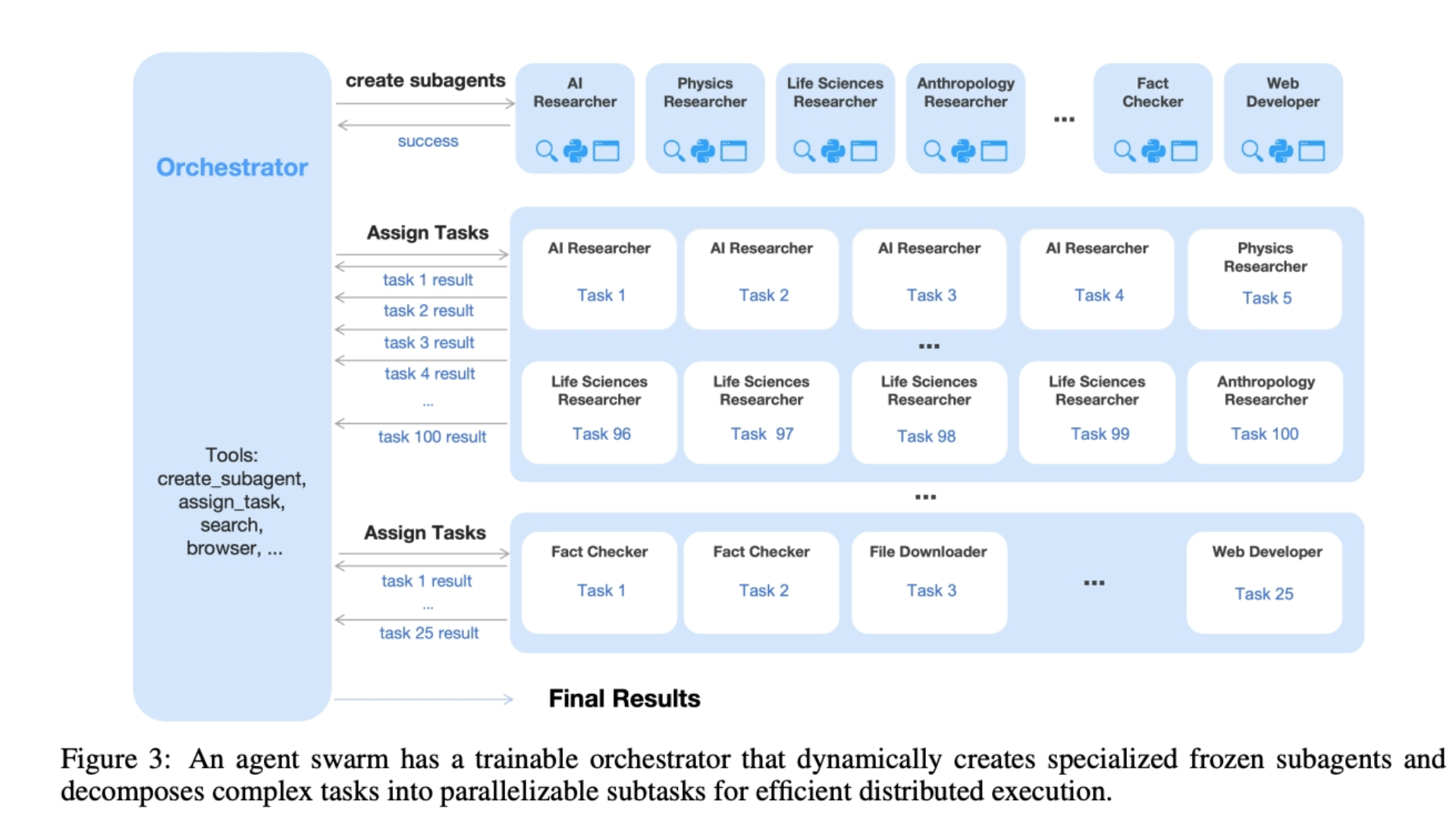
Kimi Agent Swarm(智能体集群)通过PARL(Parallel-Agent Reinforcement Learning)训练方法,将 Kimi K2.6 的功能从单任务执行扩展到协同的多智能体协作。与单 Agent 方案相比,Agent Swarm 在大规模搜索场景中将完成目标所需的最少关键步骤减少了 3× 至 4.5×,折算为实际执行时间最高缩短 4.5 倍。
用一个实际案例来解释Agent Swarm 的运作机制: 当你提交一个复杂的请求时——例如,分析 100 个不同的 YouTube 细分领域以找出顶级创作者——系统不会按顺序处理。相反,它会生成 100 个独立的搜索专家,每个专家负责一个细分领域,并在他们完成工作后汇总结果。原本需要数天人工研究或数小时顺序 AI 处理才能完成的工作,现在只需几分钟即可完成。
如何使用
Kimi Agent Swarm产品入口
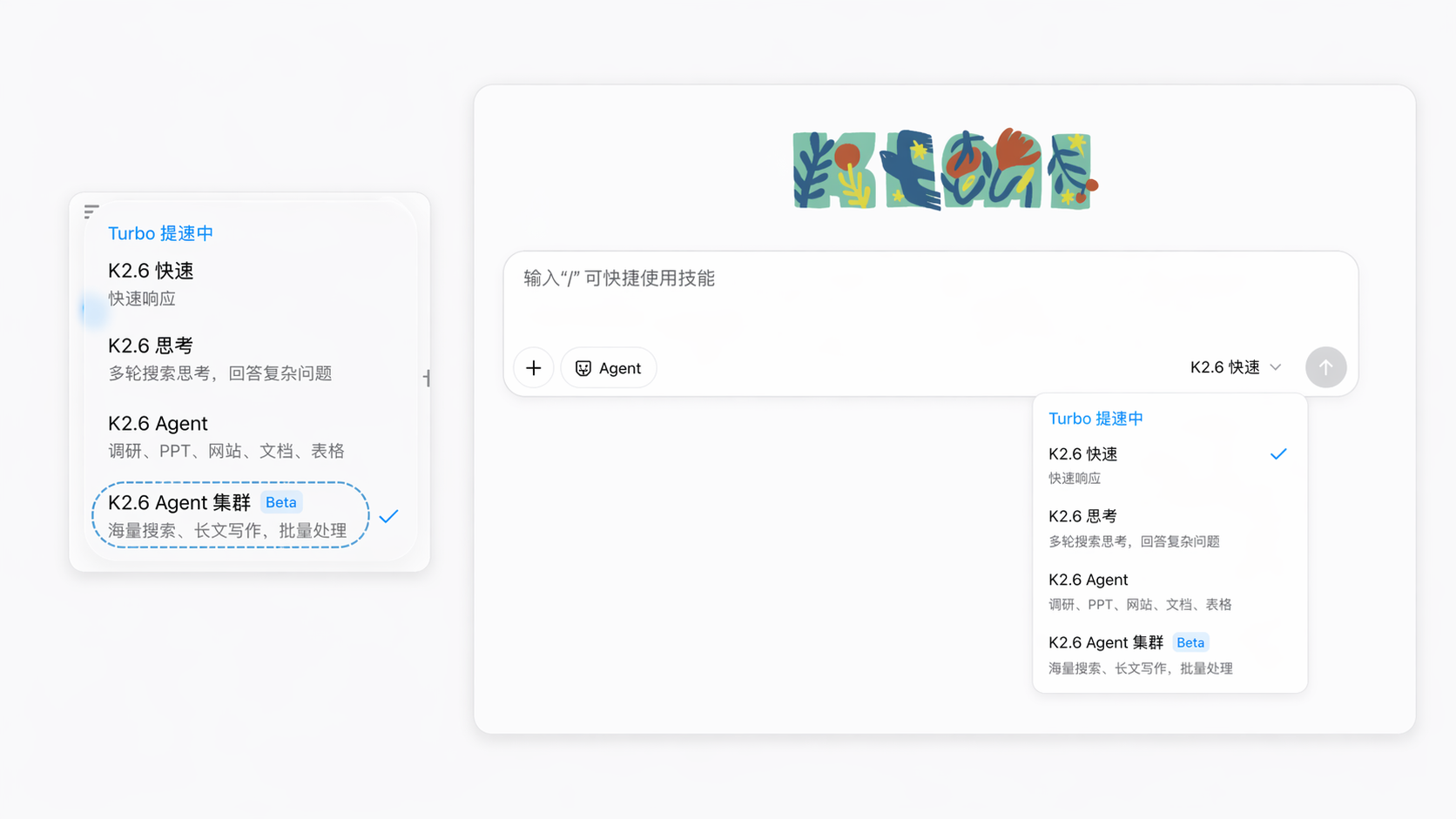
- 网页版:https://www.kimi.com/agent-swarm
- 手机/平板:打开 Kimi App,在对话框上方的模型切换按钮中选择 K3 集群模型
关于 [Beta] 标记:[Beta] 表示产品上线初期仅向少部分用户开放的试用标记,用于小范围验证与打磨;随着功能成熟会逐步移除并全量开放。
注意:Agent 集群任务消耗的额度较高(约为普通 Agent 任务的数倍),具体取决于任务复杂度和子智能体数量。Moderato、Allegretto、Allegro 会员可用。
操作步骤
- 向Kimi Agent Swarm 清晰地描述你的任务需求并发送。例如:"收集200+篇Paul Graham 文章"、"进行100个细分领域Top 3创作者挖掘"等。系统进入自动执行阶段,实时查看任务执行进展
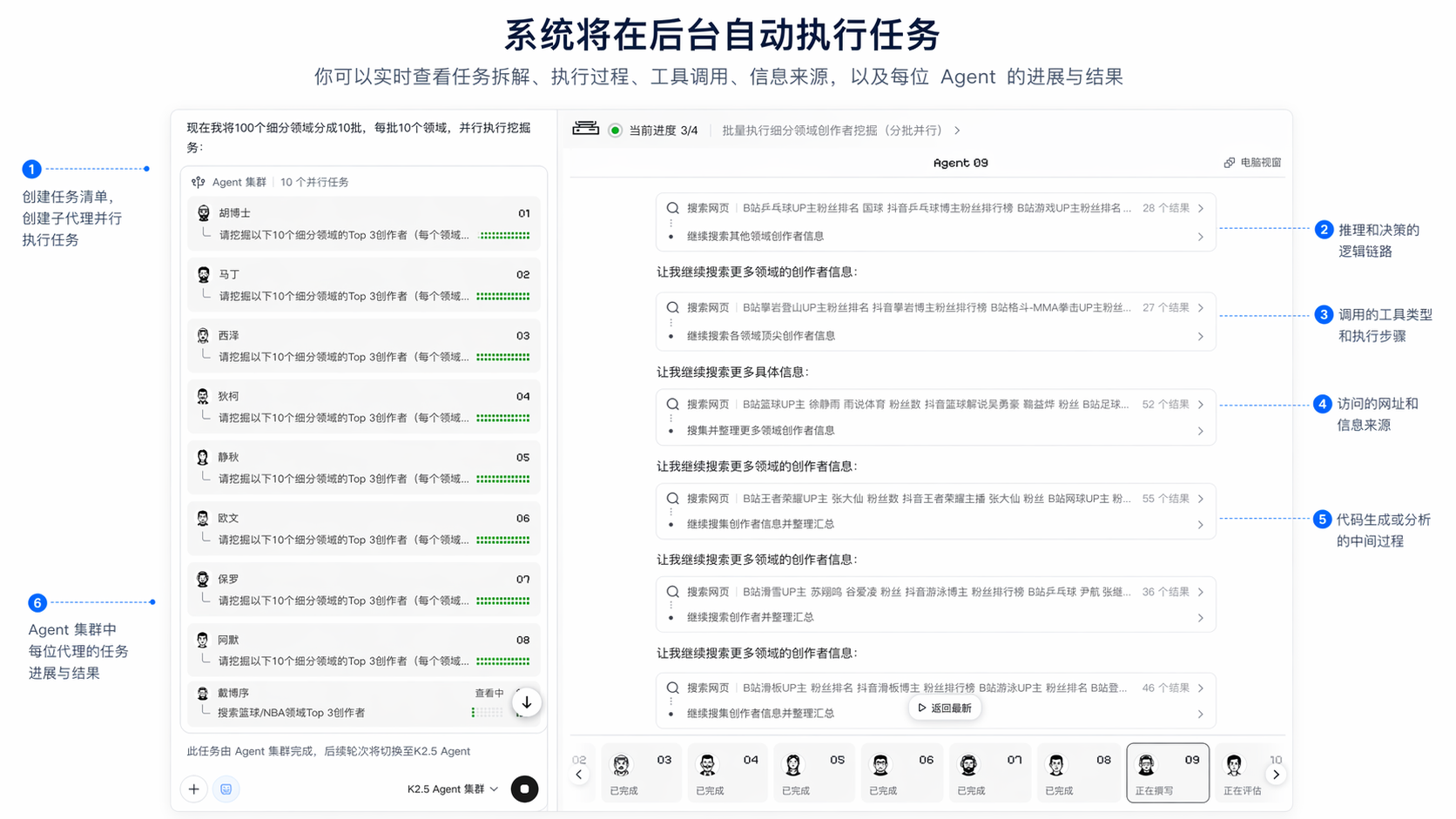
- 系统将在后台自动执行任务,你可以实时看到:
- 创建任务清单,创建子代理并行执行任务
- 推理和决策的逻辑链路
- 调用的工具类型和执行步骤
- 访问的网址和信息来源
- 代码生成或分析的中间过程
- Agent集群中每位代理的任务进展与结果
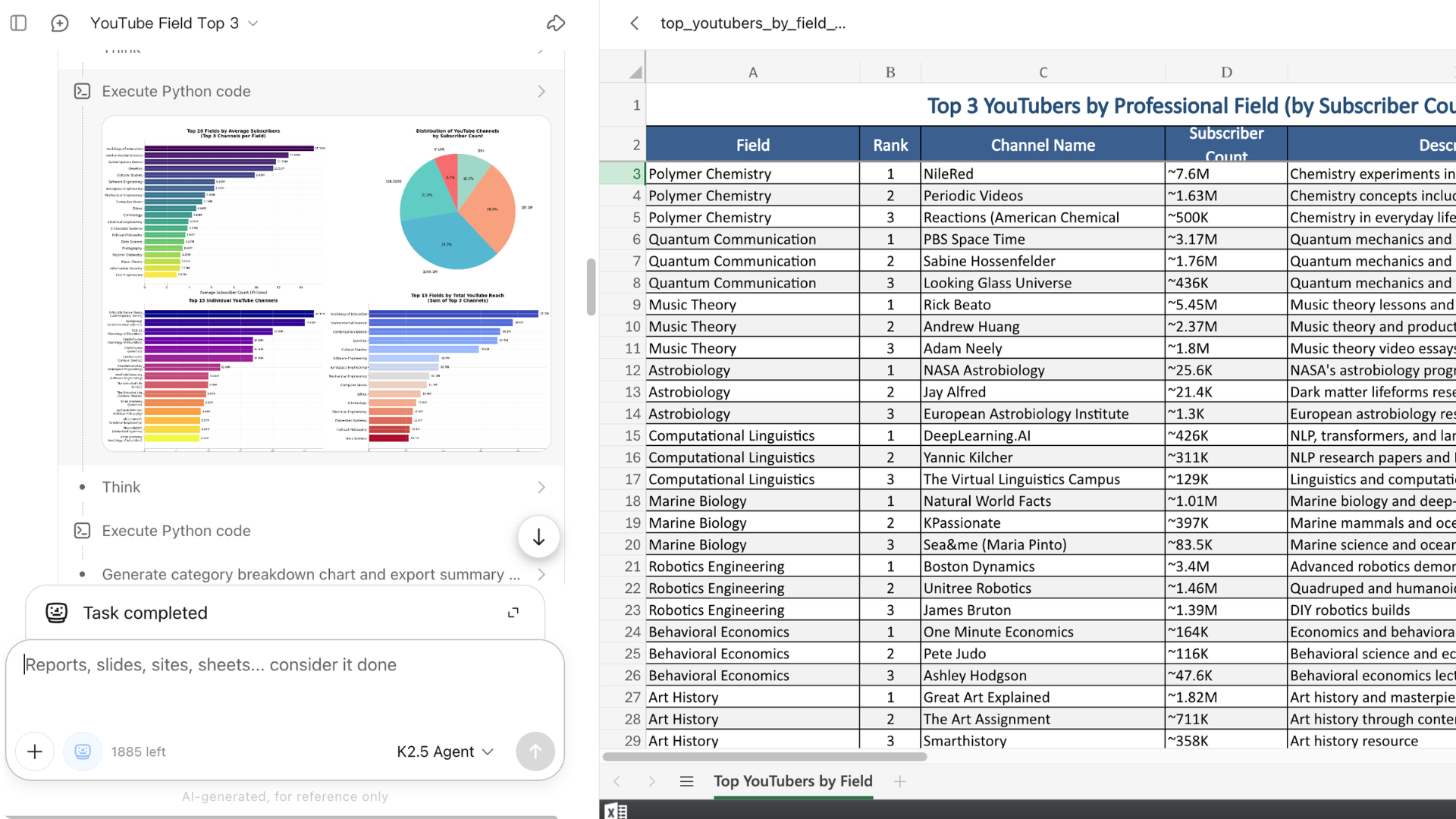
- 任务完成后,获取专业级别的交付成果
- 根据任务类型,Kimi Agent Swarm 会生成相应的输出,包含多个文件:
- 代码项目:完整可运行的网站代码、应用程序等(包含 HTML、CSS、JavaScript)
- 文件夹:任务执行过程中的所有过程文件
- 数据分析:图表、趋势分析、关键指标的表格
- 办公文档:Word 文档、PDF文档、Markdown文档、PPT 演示文稿等
- 预览、下载或分享产出成果
- 后续轮次中,Kimi 会根据任务自动在对话与 Agent 之间调度,无需手动切换
使用案例
规模化探索
案例1:100个细分领域Top 3创作者挖掘 任务要求找出100个YouTube细分领域各自的Top 3创作者。Agent Swarm 首先研究并定义每个领域,然后自主创建300个子智能体进行并行搜索,最终生成包含频道名称、订阅数、描述的结构化表格和可视化图表。
任务执行结果:100 位子智能体(sub-agent)正在寻找创作者
案例2:收集200+篇Paul Graham 文章 Paul Graham 的文章分散在个人网站、旧博客、转录演讲中。Agent Swarm指派专门的子智能体搜索、下载、分类、总结,最终将超过200篇原始文章整理进主题文件夹,并生成综合总结报告。
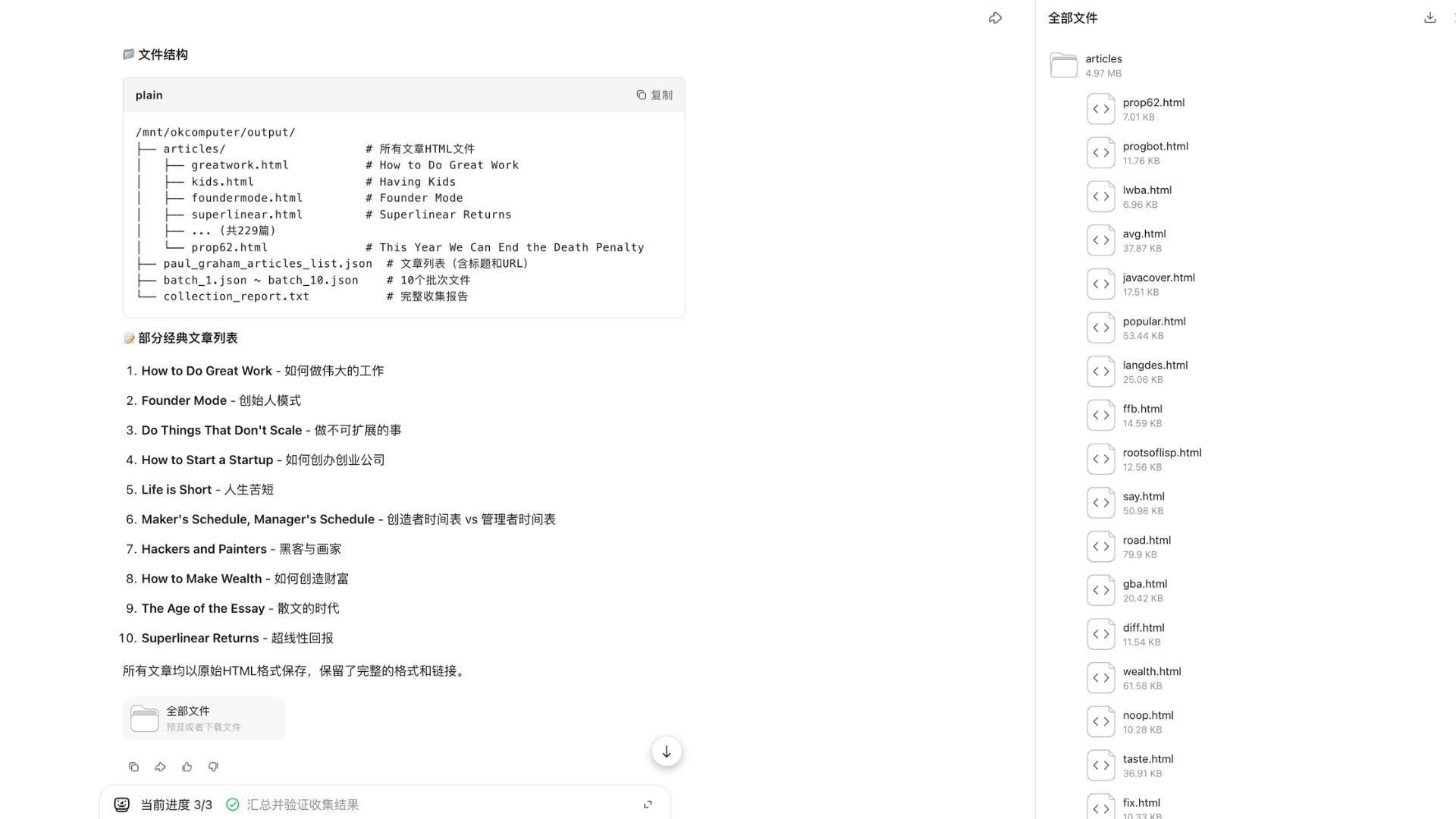
任务执行结果:收集200+篇Paul Graham 文章
规模化输出
案例:从40篇PDF生成100页文献综述 Agent Swarm 将任务分解到文档集合,部署多个写作专用子智能体,每个负责特定章节。最终输出一份100页、双栏的学术文档,包含完整格式化的引用和参考文献,以及方法分布饼图、引用网络分析图等可视化内容。
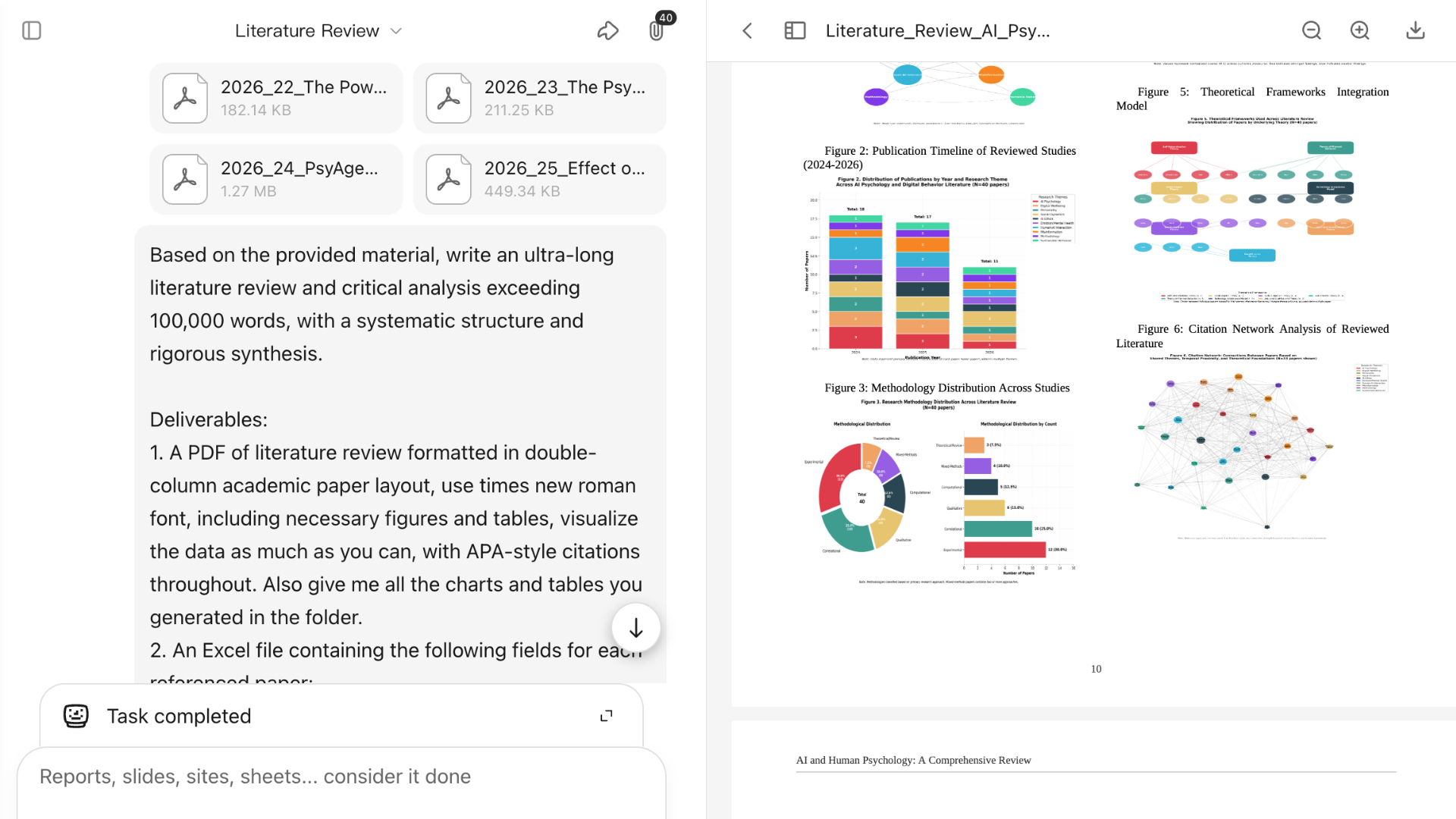
任务执行结果:Generate 100-Page Literature Review from 40 PDFs
多视角分析
Agent Swarm 可以从结构上避免群体思维(Group think),创造条件让独立智能体得出不同结论,然后强制进行调和。 案例:产品发布策略专家审查 用户要求审查一款办公产品发布策略。Agent Swarm部署了专家子智能体团队,从不同角色提出了不同观点。
- 资深产品经理:担忧技术债务
- 怀疑型投资人:质疑单位经济模型
- 客户成功负责人:捍卫边缘案例
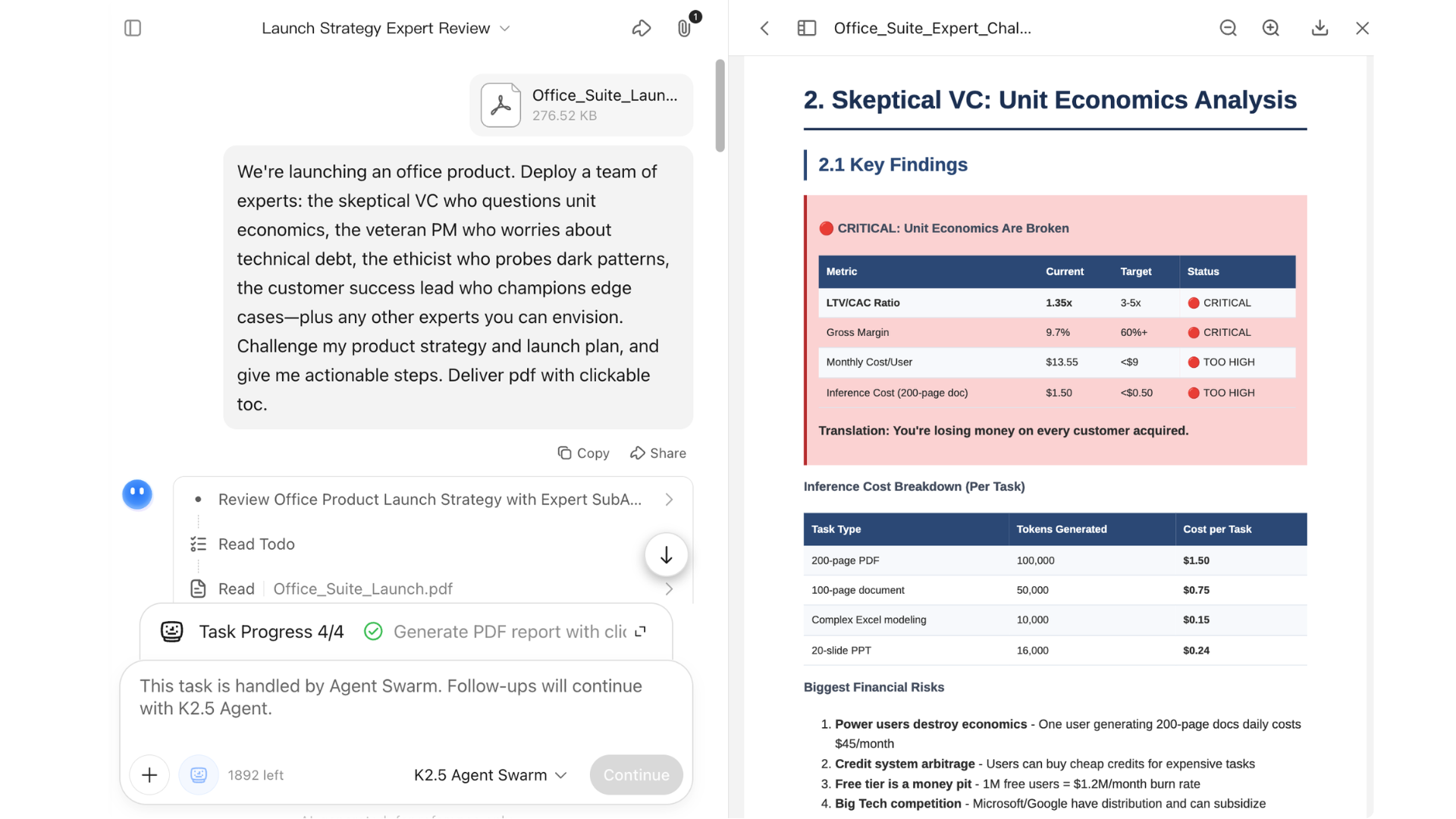
任务执行结果:Get your product plan reviewed by a team of experts
案例:《三体》20种文学风格续写 Agent Swarm创建了20位不同文学风格的"作家"子智能体——从弗吉尼亚·伍尔夫式的内心独白,到博尔赫斯式的思想迷宫,再到卡夫卡式的荒诞世界。每位"作家"独立创作,最终呈现出同一故事内核的多元叙事可能。
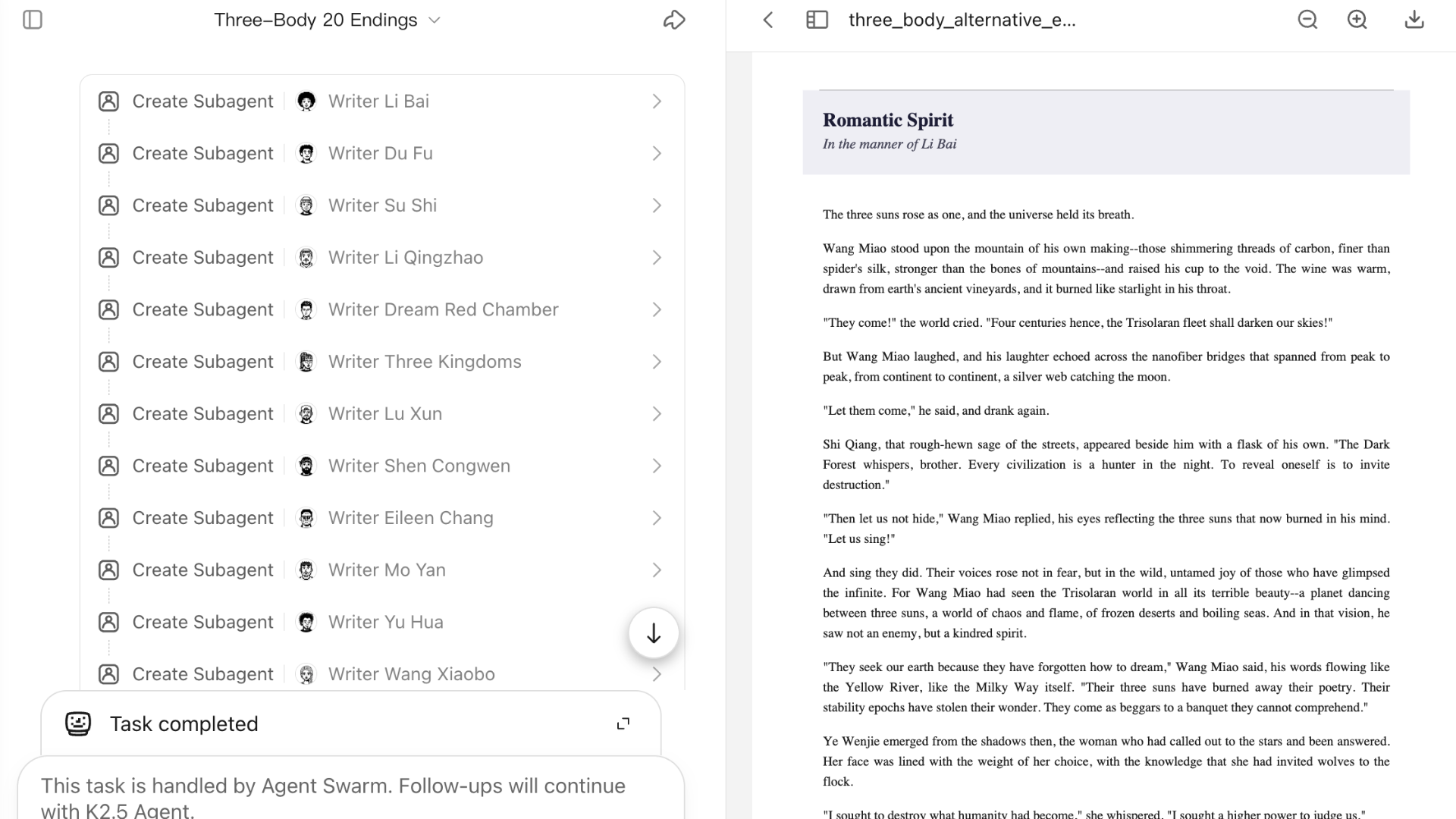
任务执行结果:Let 20 writers create alternative endings for The Three-Body Problem
技术解析
AI 可以团队协作
核心架构:指挥官 + 专业队员,想象 Agent Swarm 像一支足球队:
- 协调器(Orchestrator) = 教练/指挥官:负责看全局、定策略、分配任务
- 子智能体(Sub-agents) = 场上队员:各自专注执行具体任务,比如前锋、后卫、守门员 关键设计:队员"冻结",只练教练 训练时,所有"队员"(子智能体)保持原有能力不变,只有"教练"(协调器)通过强化学习变得更聪明。这样做有两个好处:
- 避免"功劳分不清":当一个项目成功或失败时,很难判断是哪个具体环节出了问题。冻结子智能体后,所有功劳和责任都清晰归属于协调器的调度决策。
- 训练更稳定:如果所有队员同时改变打法,团队会乱套。只调整指挥官,确保协作体系稳步优化
并行思考
传统 AI 像一个人单打独斗,做完一步再做下一步。Agent Swarm 则像让多个专家同时开工。 防止两种"偷懒"行为:
- 串行崩溃:指挥官懒得协调,把所有事都交给一个子智能体慢慢做,退化成单兵作战。
- 虚假并行:指挥官为了刷"并行指标",盲目拆出大量无意义的子任务,实际上没提升效率。 解决方案:三维度奖励机制 系统从三个角度评估指挥官的表现:
- 最终结果好不好(任务完成质量)
- 有没有真正并行(避免一个人干所有活)
- 子任务完成率(避免滥竽充数)
训练初期,后两个指标占一定权重,强制养成并行协作习惯;后期逐渐降低权重,让 AI 专注于把最终结果做到最好。
用关键步骤提高效率
怎么判断并行是否真的更快?Agent Swarm 引入了一个简单概念:关键步骤。 想象装修房子:
- 串行做法:先等瓦工铺完砖,再等木工打柜子,最后油漆工进场——每个环节排队等。
- 并行做法:瓦工、木工、水电工同时开工,整体进度取决于最慢的那个工种。 Agent Swarm 计算每个"阶段"中最慢的子智能体耗时,累加起来就是关键步骤总数。这逼着指挥官学会真正优化整体流程,而不是盲目拆任务。
AI 自我学习协作
研究人员没有直接告诉 AI"请并行处理",而是通过任务设计引导:
- 广泛搜索任务:需要同时查多个独立信息源(比如同时搜北京、上海、广州的天气)
- 深度搜索任务:需要多条推理线同时进行,最后汇总结论 AI 在解决这类问题的过程中,自然发现"分头行动"比"一个人跑腿"更快,从而自发学会并行协作。
聪明的记忆力管理
长对话中,AI 常面临"记不住"或"记太多"的困扰。常见做法如:
- 隐藏工具结果:不看中间过程
- 摘要总结:压缩信息但可能丢细节
- 丢弃所有:直接清空,彻底失忆 Agent Swarm 采用更聪明的方式:上下文分片(Context Sharding) 就像把大项目拆成几个独立小项目:
- 每个子智能体只专注自己的"小本子",记录相关细节
- 各自思考,互不干扰,避免信息混乱
- 只把关键结论汇报给指挥官,而非全盘托出 这样既保留了完整推理过程,又不会让指挥官被海量信息淹没,相当于用架构设计突破了记忆长度限制。
实际效果
在 BrowseComp 基准测试(一个考验 AI 深度信息检索能力的测试)中:
- 准确率大幅提升:从单智能体的 15.9% 提升到 33.3%
- 效率更高:相比基线上下文管理方案,完成同样任务所需的关键步骤减少约 40% 相比"丢弃所有"这种简单粗暴的记忆管理方式,Agent Swarm 又快又准。
一句话总结:Agent Swarm 让 AI 从"一个人干所有活"变成"一支配合默契的团队",通过聪明的指挥调度、真正的并行协作和高效的记忆管理,实现 1+1>2 的效果。
应用场景
Agent Swarm 特别适用于以下复杂任务:
- 大规模信息检索:大规模的互联网信息收集
- 批量下载:大规模收集各类文件和资料
- 广域阅读:处理 100+ 文档的大量文本
- 长文写作:创建超过 10 万字的结构化长内容
- 复杂编程任务:前端开发、代码审查、多文件重构
- 办公自动化:生成专业级文档、电子表格、演示文稿
相关介绍
- Kimi官方博客 - "Kimi Agent Swarm: 100 Sub-Agents at Scale" (https://www.kimi.com/blog/agent-swarm)
- Kimi K2.5技术博客 - "Kimi K2.5: Visual Agentic Intelligence" (https://www.kimi.com/blog/kimi-k2-5)
- Kimi K2.6技术博客 - "Kimi K2.6: Advancing Open-Source Coding" (https://www.kimi.com/blog/kimi-k2-6)
- Kimi K3技术博客 - "Kimi K3" (https://www.kimi.com/blog/kimi-k3)
本文是否对你有帮助