10 Free AI Agents that Make Work Faster and More Efficient

Explore 10 free AI agents transforming how people work, automate tasks, and solve problems. From coding to research, these tools can handle it all. Kimi AI Agent offers free usage credits with powerful reasoning and long-context support to help you get started.

10 min read2026-07-22
Kimi free AI agent

Finding reliable free AI agents can be challenging when platforms use different pricing and access models. While some tools offer free plans or usage credits, others work through user-provided API keys or flexible pay-as-you-go options. This guide explores 10 AI agent platforms, comparing their capabilities, access methods, and best use cases to help you find the right option for your workflow.

10 free AI agents at a glance

Features and use cases can sometimes make AI agents seem similar on the surface. Below is a side-by-side comparison that provides a quicker way to evaluate their accessibility, strengths, and ideal applications before exploring each option in more detail.

AI agent platformAgent typeKey capabilitiesIdeal use scenarioDesigned for
Kimi AI AgentAutonomous AI agentDeep research, code generation, data analysis, PPT/document creation, multi-source information processing, long-context reasoningAll-purpose AI tasksProfessionals, students, researchers, developers
HermesOpen-source agent frameworkCustom workflows, external LLM connections, agent behavior controlCustom AI agent buildingDevelopers, AI builders, automation projects
OpenClawOpen agent frameworkCustom deployment, service integration, infrastructure controlSelf-hosted agent workflowsTechnical teams, researchers, experimenters
AutoGPTGoal-driven AI agentTask decomposition, autonomous planning, multi-step executionAutonomous task executionAutomation, productivity workflows, AI experiments
AutoGenMulti-agent systemAgent communication, role delegation, collaborative problem solvingMulti-agent collaborationEnterprise AI, research, complex workflows
CrewAIMulti-agent orchestrationAgent roles, task delegation, workflow coordinationRole-based agent teamsBusiness workflows, content teams, operations
LangGraphStateful agent frameworkGraph workflows, memory, conditional execution, and agent controlBuilding advanced AI agentsDevelopers, AI applications, complex systems
n8nAutomation + AI workflow platformVisual workflows, API integrations, business process automationWorkflow automationBusinesses, marketing, internal tools
LlamaIndexData-connected AI frameworkRAG, document retrieval, data indexing, knowledge assistantsKnowledge-based AI systemsEnterprise search, document AI, data projects
FlowiseVisual AI agent builderDrag-and-drop agent workflows, tool connections, and rapid prototypingNo-code AI workflow creationBeginners, educators, prototype builders

10 free AI agent platforms that are worth trying

If you're looking for free AI agents worth trying, there are now plenty of options available. From deep research and content creation to workflow automation, these platforms can handle a wide range of tasks. Here are some of the most notable AI agents available today.

Kimi AI Agent

Among any modern free AI agents list, Kimi AI Agent stands out for combining autonomous task execution with a generous free usage quota. It can generate code, conduct deep research across multiple sources, create presentation decks, process datasets, and organize complex information with minimal manual input. Its ability to move between analytical, creative, and operational tasks makes it suitable for professionals, students, researchers, and technical teams seeking a versatile AI workspace rather than a single-purpose assistant.

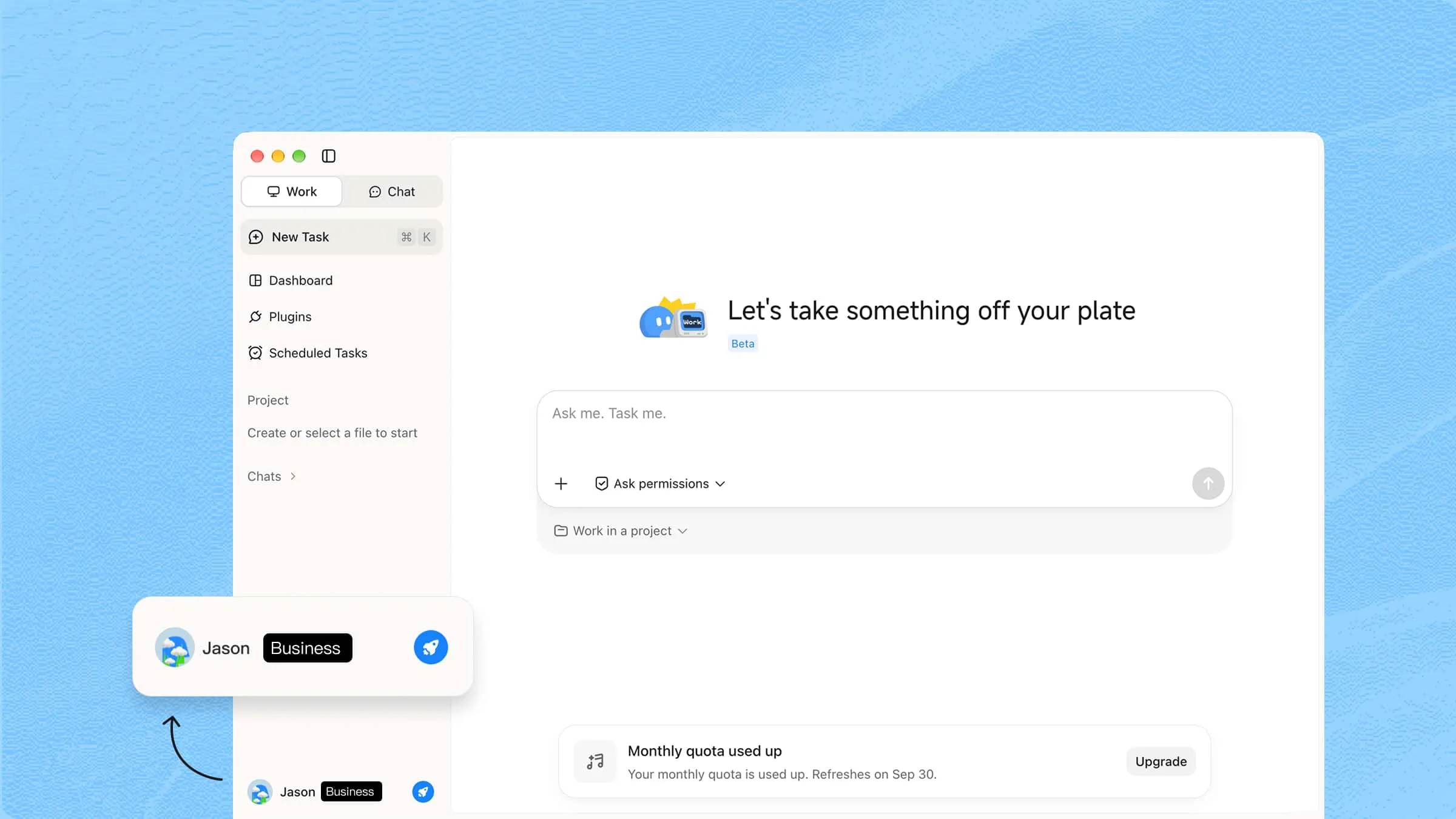
Interface of the Kimi AI agent

Main features

  • Advanced multi-source web research Aggregates evidence from academic publications, news outlets, official databases, and industry resources to produce well-grounded findings with greater source diversity.

  • Ultra-long context for complex tasks Retains visibility across extensive reports, large codebases, and multi-file projects, making it possible to work with substantial information volumes in a single session.

  • Multimodal understanding and reasoning Combines textual, visual, and document-based inputs into a unified analytical process, uncovering connections that may be missed through single-format analysis.

  • Iterative research and flexible output generation Accommodates evolving research directions while transforming findings into deliverables such as reports, presentations, spreadsheets, and PDFs.

Suitable for

  • Deep research and evidence gathering

  • Code generation and development tasks

  • Data cleaning, analysis, and reporting

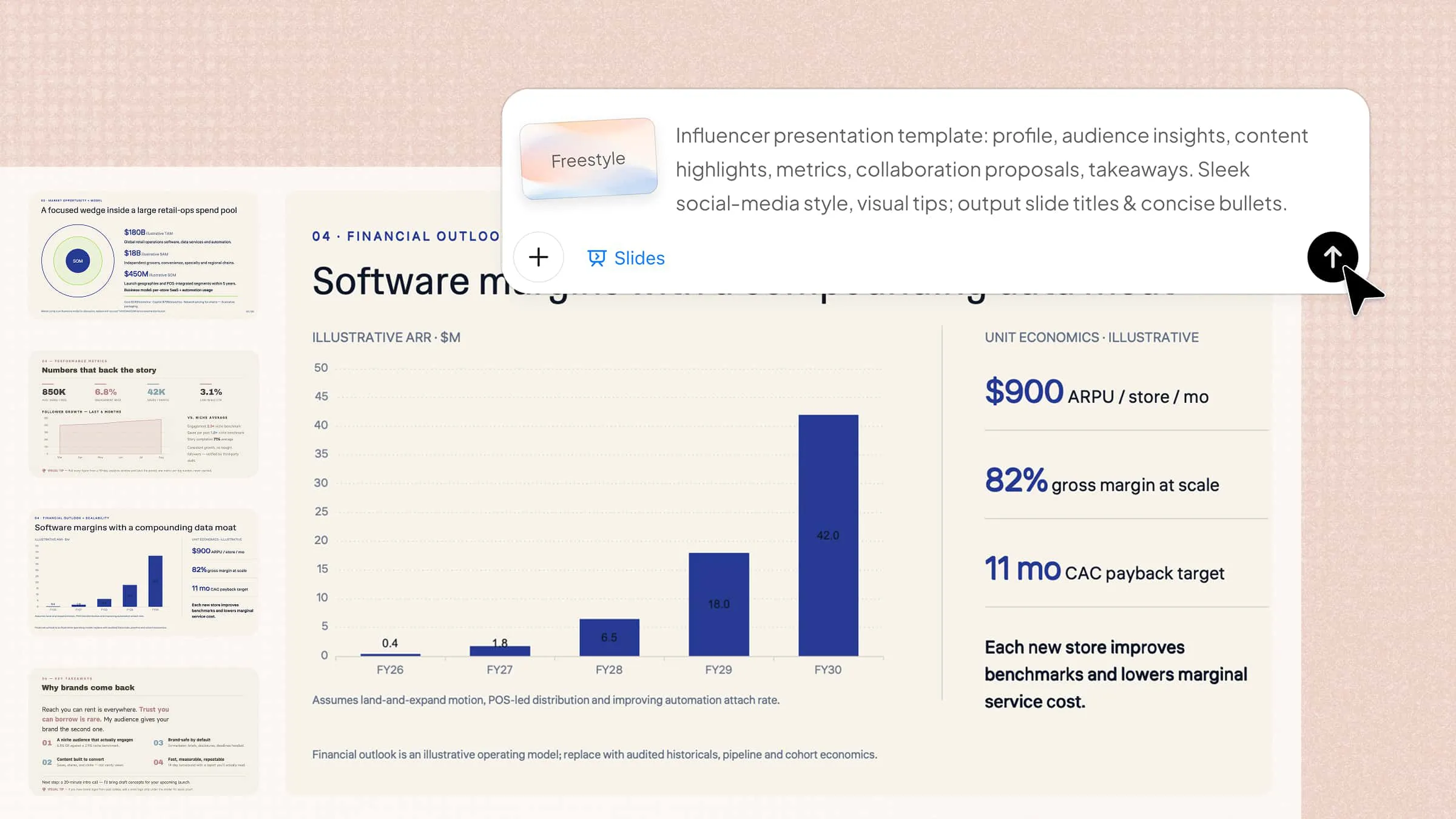
  • Presentation and document creation

How to use the Kimi AI agent?

Follow these steps to learn how to use Kimi as a free AI agent.

Step 1: Define your tasks

Begin by describing the objective, expected outcome, and any important requirements. The more precise the instructions, the better the agent can plan, prioritize information, and execute the task effectively.

Example prompt:

Analyze the latest AI agent market trends and identify key growth opportunities. Include competitor insights, emerging technologies, adoption challenges, and strategic recommendations. Present the findings as a structured report with supporting sources.
Defining the task in the Kimi AI agent

Step 2: Let the AI agent process

Once the prompt is submitted, Kimi AI Agent independently researches the topic, evaluates relevant information, and organizes findings into a structured workflow. It can perform multiple stages of analysis while adapting its approach as new information emerges.

Letting AI process the prompt in the Kimi AI agent

Step 3: Review the result

Examine the output to verify accuracy, completeness, and alignment with your objectives. If additional details, alternative perspectives, or refined deliverables are needed, continue the conversation to further enhance the final result.

Reviewing the results of the Kimi AI agent

Hermes

For users looking to create free AI agents with greater customization, Hermes provides an open-source framework that works with external LLM providers through user-supplied API keys. Its design emphasizes flexibility, making it appealing to developers who prefer configuring workflows rather than relying on predefined automation. The framework itself is free, although model usage costs depend on the chosen API service.

Hermes - to create an AI agent for free

Key features

  • Fully customizable architecture for agent development

  • Connects with user-provided AI model APIs

  • Adapts to diverse automation requirements

  • Provides granular oversight of agent behavior

Suitable for

  • AI developers

  • Agent experimentation

  • Custom automation projects

  • Self-hosted environment

OpenClaw

OpenClaw is a community-driven agent framework focused on transparency and adaptability. Users seeking a free AI agent online option often explore it because of its open architecture and ability to support customized autonomous workflows. Its self-hosting capabilities make it particularly attractive for technical teams that require greater control over deployment

OpenClaw - free AI agent platform

Key features

  • Greater control over infrastructure and data

  • Individual capabilities can be tailored independently

  • Community-driven development and customization

  • Supports integration with external services

Suitable for

  • Research projects

  • Technical teams

  • AI experimentation

  • Independent deployments

AutoGPT

AutoGPT helped popularize the concept of AI agents capable of pursuing objectives with minimal human guidance. Instead of responding to one instruction at a time, it breaks larger goals into actionable sequences and manages progress independently. Users interested in building free AI agent projects frequently encounter AutoGPT as an influential starting point within the autonomous-agent ecosystem.

AutoGPT - free AI agents to use

Key features

  • Pursues objectives through multiple task stages

  • Organizes actions before execution begins

  • Maintains progress across extended operations

  • Expands functionality through external integrations

Suitable for

  • Workflow automation

  • Productivity projects

  • Research assistance

  • Autonomous operations

AutoGen

AutoGen features collaboration between multiple AI agents, allowing them to communicate, delegate responsibilities, and jointly solve complex challenges. For those aiming to create an AI agent for free prototypes, it offers a powerful environment for building coordinated agent systems. Its architecture is particularly valuable when a single-agent approach becomes limiting.

AutoGen - free online AI agent

Key features

  • Enables agents to work together on tasks

  • Supports structured interaction patterns

  • Allows intervention during critical stages

  • Works with various language models

Suitable for

  • Multi-agent systems

  • Complex workflows

  • Research orchestration

  • Enterprise AI projects

CrewAI

CrewAI introduces a role-based methodology where specialized agents operate, such as members of a digital team. Researchers, analysts, planners, and executors can be assigned distinct responsibilities, creating a structured workflow that reflects human collaboration. Among the many free AI agents to use for experimentation, CrewAI stands out for its emphasis on delegation and task specialization.

CrewAI - free tool to build AI agents

Key features

  • Assigns specialized responsibilities to agents

  • Distributes work across coordinated teams

  • Maintains structured workflow progression

  • Simplifies deployment of recurring processes

Suitable for

  • Business operations

  • Content production

  • Research teams

  • Process management

LangGraph

If you want to create AI agents for free, LangGraph offers an open-source framework focused on stateful agent development. It allows developers to model complex decision paths rather than relying on simple prompt-response interactions. The platform is particularly effective when applications require memory, conditional branching, and controlled execution logic. While LangGraph itself is free, external model providers may require separate API access.

LangGraph - free AI agent

Key features

  • Graph-based workflows for complex agent orchestration

  • Persistent memory across extended interactions

  • Conditional routing for adaptive task execution

  • Native integration with the LangChain ecosystem

Suitable for

  • Customer-support agents with multi-step workflows

  • Research assistants requiring contextual continuity

  • Human-in-the-loop decision processes

  • Advanced agent architecture experimentation

n8n

n8n approaches AI from a practical operations perspective, combining intelligent capabilities with thousands of business applications through visual automation. Its self-hosted edition can be used at no cost, making it attractive for teams that prefer ownership over their infrastructure. Rather than focusing on model experimentation, it excels at connecting databases, communication platforms, and enterprise systems into unified processes.

n8n - free AI agent to use

Key features

  • Visual drag-and-drop workflow builder

  • Extensive integrations with APIs and SaaS platforms

  • Self-hosted deployment option

  • Event-driven triggers and automation sequences

Suitable for

  • Business process automation

  • CRM and marketing operations

  • Internal productivity systems

  • Connecting AI with existing software stacks

LlamaIndex

Among the popular free AI agents to use for knowledge-driven projects, LlamaIndex specializes in transforming scattered information into accessible intelligence. It creates structured connections between language models and external content sources, allowing responses to draw from documents, databases, and proprietary repositories. The core platform is open source, with costs varying based on the chosen model infrastructure.

LlamaIndex to build a free AI agent

Key features

  • Connects AI agents with private and external data sources

  • Advanced retrieval for context-aware responses

  • Flexible indexing across diverse content formats

  • Supports RAG-based agent applications

Suitable for

  • Knowledge management systems

  • Enterprise search and retrieval

  • Document-based AI assistants

  • Data-driven agent development

Flowise

Unlike frameworks that primarily target developers, Flowise emphasizes visual creation through a drag-and-drop interface that reduces the complexity of building AI workflows. Users can connect models, tools, databases, and agent components without writing extensive code, making experimentation more accessible. Its node-based design provides clear visibility into how information moves through a workflow, which is particularly valuable during testing and optimization.

Flowise free AI agent

Key features

  • Visual node-based workflow builder

  • Multi-model and AI service integrations

  • Custom chains, tools, and agent orchestration

  • Rapid deployment with minimal configuration

Suitable for

  • No-code AI development

  • Workflow prototyping

  • Internal AI applications

  • Educational experimentation

How to choose the right AI agents?

With so many platforms available, from enterprise frameworks to free tools to build AI agents, selecting the right option can quickly become overwhelming. Focusing on a few critical factors will help you identify a solution that aligns with your technical requirements, workflow expectations, and long-term objectives.

  • Match the AI agent to your goals Start by defining the outcome you want to achieve, whether it's research, automation, coding, content generation, or business operations. Different agents are optimized for different responsibilities, so the purpose should guide the selection process.

  • Evaluate reasoning and task execution capabilities Not all agents perform equally when handling complex objectives. Assess how effectively the system can plan actions, break down challenges, and complete multi-step tasks without requiring constant intervention.

  • Check integrations and tool support The value of an AI agent frequently depends on the ecosystem it can access. Compatibility with APIs, databases, productivity software, and external services can significantly expand its practical usefulness.

  • Consider accuracy and reliability Consistent performance is essential, particularly for professional or research-oriented workflows. Look for agents that provide dependable outputs, maintain logical consistency, and handle information with greater precision.

  • Look for scalability and customization Requirements occasionally evolve as projects grow in complexity. Choosing a platform that supports workflow customization, expanded functionality, and larger workloads can provide greater flexibility over time.

Conclusion

In conclusion, free AI agents range from open-source frameworks to ready-to-use platforms for research, automation, and productivity. By comparing their capabilities, accessibility, and use cases, you can find the best fit for your workflow. Use these insights to choose the right balance of functionality and flexibility. For a practical starting point, Kimi AI Agent combines autonomous task execution, deep research, coding assistance, and document generation in one platform with free access.

FAQ

What are multi-agent systems?
Multi-agent systems involve multiple AI agents working together toward a common objective. Each agent performs a specialized function, such as planning, research, or execution. This collaborative structure is often more effective for handling complex tasks than a single-agent approach.
Which is the ideal free AI agent?
The ideal free AI agent depends on the tasks you want to accomplish. For users seeking a ready-to-use solution, Kimi AI Agent offers free usage quotas that support research, coding, document generation, and task automation without requiring complex setup. Users who need higher limits, longer-running tasks, or access to advanced capabilities can upgrade to a subscription plan. This combination of free access and scalable features makes Kimi AI Agent a practical choice for both casual users and professionals.
What can AI agents do?
AI agents can research information, analyze data, generate code, automate workflows, and create various forms of content. More advanced systems can also interact with external tools and complete multi-step objectives autonomously. Their capabilities vary depending on the platform and available integrations.
Do I need coding skills to use AI agents?
Not necessarily, many modern AI agents provide intuitive interfaces that enable users to interact through natural-language instructions rather than programming. However, technical knowledge can be beneficial when configuring advanced workflows, integrating external services, or customizing agent behavior for specialized applications.
Can AI agents use external tools?
Yes, various free AI agents can connect with external applications, APIs, databases, and productivity platforms. These integrations enable them to retrieve information, manipulate files, execute actions, and interact with digital environments beyond the chat interface. The breadth of available tools frequently plays a significant role in determining an agent's practical capabilities.
You Might Also Like
How to Build an AI Agent for Your Workflow
2026-07-22
10 AI Agent Examples in Real Life You Should Know
2026-07-22
20 Real-World AI Agent Use Cases across Industries
2026-07-22
AI Agents Explained: How They Work, Types, and Examples
2026-07-22
What Is Agentic AI? Meaning, Examples, and Workflows
2026-07-22